
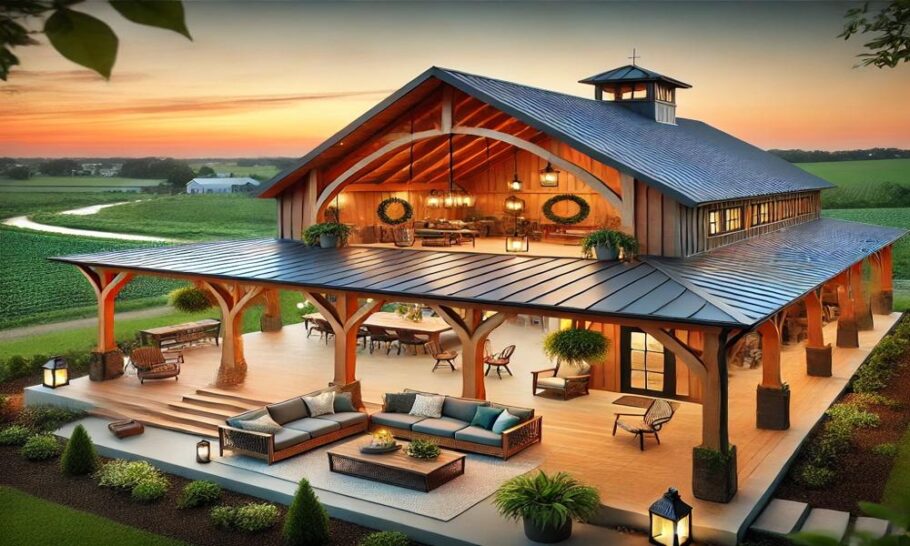
The barndominium trend has taken the housing market by storm, and for good reason. These steel-framed hybrid homes offer durability, open floor plans, and cost-effective construction that traditional stick-built houses struggle to match. But there is one upgrade taking the barndominium concept to new heights—literally. Adding a rooftop deck transforms a practical rural home into a showpiece of modern country living. This combination delivers views, usable outdoor space, and a design feature that sets a property apart from every other barn-style home on the block.
The Unique Appeal of a Barndominium Rooftop Deck
Most barndominiums follow a familiar silhouette—a long, rectangular metal building with a pitched or gambrel roof. That shape leaves plenty of unused vertical real estate. A rooftop deck reclaims that space, turning what would be dead roof area into a functional outdoor living room. Unlike ground-level patios or porches, a rooftop deck offers privacy, sweeping sightlines, and a genuine sense of escape. Imagine morning coffee with a view of rolling pastures, or evening gatherings under string lights while the sun sets behind the barn. That is the promise of a well-designed rooftop barndominium.
These structures are uniquely suited to rooftop additions because of their construction. Steel framing and metal roofing provide inherent strength and weather resistance. The same post-beam construction that allows wide-open interiors also supports the extra load of a deck, people, furniture, and even planters. In many ways, a barndominium is better prepared for a rooftop deck than a traditional house with wood trusses and asphalt shingles.
Key Benefits of Adding a Rooftop Deck
Expanded Living Space Without Expanding the Footprint
Property lines, septic fields, and existing outbuildings often limit how far a home can spread outward. A rooftop deck solves that problem by building upward. For barndominiums on smaller rural lots or acreages with strict building envelopes, going vertical adds square footage without touching the ground. That extra space serves as a guest hangout, a private retreat, or an outdoor office during pleasant weather.
Unobstructed Views That Ground Decks Cannot Match
One of the main reasons people choose barndominium living is the connection to wide-open landscapes. But a ground-level patio only offers eye-level views of fences, sheds, and the nearest treeline. A rooftop deck changes the perspective entirely. Elevated by at least one story, the deck overlooks obstacles and reveals the horizon. For barndominiums built on modest hills or near water, those views become downright spectacular.
Natural Light and Passive Ventilation
A rooftop deck does more than provide outdoor seating. The structure supporting it often includes skylights, cupolas, or open stairwells that funnel light and air into the rooms below. Positioning the deck over a portion of the main living area allows for strategic placement of glass doors or large windows underneath, turning the deck into a shade structure that still permits passive solar gain in cooler months.
Property Value and Market Differentiation
Barndominiums already attract buyers looking for something different from suburban tract homes. A rooftop deck makes the property even more distinctive. In rural real estate markets where competition centers on acreage and outbuildings, a feature like this signals quality and creativity. Buyers remember the barndominium with the rooftop deck long after they forget the dozen other metal buildings they toured.
Entertainment and Social Gatherings
Few things beat the atmosphere of an elevated outdoor space for hosting friends and family. A rooftop deck keeps the party contained away from muddy driveways, livestock areas, or workshop entrances. It creates a distinct zone for relaxation that feels separate from the day-to-day chores of rural property management. Add a grill, a wet bar, or simply a few comfortable seating areas, and that deck becomes the natural gathering spot for every event.
Privacy from Neighbors and Road Noise
Even on large properties, ground-level outdoor spaces remain visible from passing cars and neighboring homes. A rooftop deck sits above most sightlines. The surrounding walls or railings block the rest. That privacy encourages more frequent use. No need to worry about farm equipment rumbling past or curious glances from the road. The deck becomes a personal sanctuary.
Design Ideas for a Barndominium Rooftop Deck
Structural Considerations That Inform Everything Else
Before sketching any layout, assess the barndominium’s existing frame. Most post-frame buildings can support additional dead load, but the engineering matters. Reinforcing the roof trusses or adding steel beams may be necessary. Work with a structural engineer who understands metal buildings. The goal is a deck that feels solid underfoot without any bounce or flex. Also consider drainage—water must flow off the deck surface without pooling against the house or leaking into the structure below.
Access Solutions That Feel Natural
Getting up to the deck should not feel like an afterthought. Stairs or a staircase work best when integrated into the floor plan during initial construction. A straight run of stairs along an interior wall keeps the path intuitive. Spiral staircases save floor space and add visual interest but can be awkward for carrying furniture or trays of food. For maximum impact, consider an exterior stair tower made of steel and wood that mimics the barndominium’s industrial aesthetic. Elevators are possible but expensive—save that for luxury builds or accessibility needs.
Deck Materials That Match the Barndominium’s Character
Metal barndominiums call for materials that either contrast or complement. Concrete pavers, porcelain tiles, or composite decking work well because they resist moisture and temperature swings. Wood looks beautiful but requires sealing and upkeep. Steel grating or expanded metal fits the industrial barn vibe perfectly while allowing rainwater to pass through to a drainage layer below. Whatever the choice, ensure the surface stays slip-resistant. Morning dew and unexpected rain showers make smooth materials dangerous.
Rooftop Gardens and Green Elements
A rooftop deck on a barndominium does not need to be all hardscape. Raised planters built into the deck design soften the industrial edges and provide shade for seating areas. Choose drought-tolerant perennials, ornamental grasses, or even small evergreens in deep containers. For the ambitious, a green roof section with sedum or native groundcover reduces stormwater runoff and insulates the rooms below. Just account for the added weight of saturated soil when engineering the structure.
Entertainment Zones That Make Sense for the Space
Think about how the deck will actually be used. A dining area near the access point makes sense for carrying plates. A lounge zone farther out takes advantage of the best views. Include a covered section for rainy days or intense afternoon sun. A pergola or retractable awning provides shade without blocking the sky entirely. Outdoor kitchens on rooftop decks work well but require running gas lines and water up to the level—plan for that during rough-in. Fire pits or propane fire tables extend the usable season into cool evenings.
Glass Railings for Uninterrupted Sightlines
Nothing ruins a million-dollar view like bulky wood or metal railings. Glass panel railings keep the vista clear while meeting safety codes. Frameless glass systems look modern and clean, but framed options cost less and still do the job well. Tempered glass stands up to wind and weather. For barndominiums in snowy regions, consider railings with removable panels to make snow clearing easier.
Lighting That Transitions from Day to Night
Rooftop decks shine brightest in the evening. Recessed step lighting prevents tripping hazards on stairs. Low-voltage post lights or string lights create warmth without overwhelming the night sky. Uplighting on architectural features or nearby trees adds depth. Avoid floodlights that blast the whole deck with harsh glare. The goal is subtle illumination that invites lingering.
Hot Tubs and Water Features
A hot tub on a rooftop deck feels indulgent because it is. But barndominium construction supports the weight with proper engineering. Position the tub near a structural wall or directly over a steel column. Ensure the drainage plan accounts for overflow and splashing. Fill and drain systems need access to water and power. A small plunge pool or fountain adds soothing sound without the maintenance headaches of a full spa.
Multi-Level Decks for Visual Interest
Instead of one flat surface, consider stepping the deck across different roof sections. A lower level near the main bedroom exit and a higher level accessed by a few steps creates distinct zones. Each level serves a different purpose—dining on one, lounging on another. This approach also works around existing roof penetrations like plumbing vents or HVAC equipment, tucking those elements under a bench or inside a small enclosure.
Practical Considerations Before Building
Weight Loads Are Non-Negotiable
Every rooftop deck begins and ends with load calculations. Live loads (people, furniture, snow) combine with dead loads (the deck structure itself). Barndominium roofs typically handle 20 to 30 pounds per square foot for snow in many climates, but a deck requires 40 to 60 pounds per square foot minimum. That means reinforcing the existing frame. Do not skip engineering. Do not trust guesswork. A collapsed deck ruins the house and endangers everyone below.
Permits and Building Codes
Rural areas often have looser permitting than cities, but that does not mean no rules. Check with the local building department about rooftop deck requirements. Guardrail heights, stair tread dimensions, and egress paths all follow the International Residential Code. Some jurisdictions classify rooftop decks as additional stories, triggering setbacks or height limits. Deal with permits before construction starts to avoid fines or forced removal later.
Drainage and Waterproofing
Water is the enemy of any roof structure. A rooftop deck needs a reliable waterproof membrane beneath the surface. Torch-down modified bitumen, liquid-applied membranes, or EPDM rubber all work when installed correctly. The deck surface itself must allow water to drain to scuppers or internal drains. Flat roofs need slope—at least one-quarter inch per foot. Ponding water leads to leaks, rot, and premature failure. Include overflow drains as backup in case the primary drains clog with leaves or debris.
Maintenance Access
Rooftop decks look great on day one. Keeping them that way requires regular attention. Clean gutters and drains every season. Inspect the membrane for punctures or blisters. Check railings for loose fasteners. Power wash the deck surface annually. For composite or PVC decking, sweep away dirt and organic matter that can stain. For wood decks, seal and stain every two years. Build a maintenance hatch or accessible panel for checking the roof structure underneath.
Climate-Specific Design
A rooftop deck in Texas looks different from one in Minnesota. Hot climates need shade structures and light-colored surfaces to reflect heat. Cold climates need snow load capacity and heating elements for stairs and walking surfaces. Windy regions require secure railings and furniture tie-downs. Rainy areas demand exceptional drainage and covered spaces. Match the design to the local weather patterns, not a generic Pinterest image.
Blending Barndominium Aesthetics with Modern Rooftop Design
The best rooftop decks feel like a natural extension of the barndominium rather than an add-on. Carry the same metal paneling or corrugated siding up onto the deck’s knee walls. Use similar color palettes—charcoal gray, barn red, weathered zinc, or matte black. Repeat design cues like exposed fasteners, gusset plates, or sliding barn door hardware in the deck’s railings or gates.
Inside the barndominium, connect the deck visually and physically. Large sliding glass doors or multi-panel bifold doors open the interior to the deck, erasing the boundary between inside and out. Flooring materials that continue from the main level to the deck create flow. A consistent ceiling height through the door opening makes the transition seamless.
For barndominiums with lofts or second-story living areas, position the deck off the upper level for direct access. This works especially well when the main floor remains dedicated to workshops, garages, or storage while the upper floor houses bedrooms and living space. The deck then serves as an outdoor extension of the private quarters.
Final Thoughts
A barndominium with a rooftop deck represents the best of both worlds—the rugged practicality of a metal barn and the elevated luxury of sky-level outdoor living. The design possibilities range from simple steel grating and folding chairs to elaborate multi-level spaces with full kitchens and spas. What matters most is solid engineering, thoughtful drainage, and a clear vision for how the space will be used day to day.
For anyone planning a barndominium build or considering a major renovation, putting a rooftop deck on the short list of features pays off in enjoyment, value, and sheer uniqueness. Few homes offer the chance to watch a thunderstorm roll across open fields from the safety of a covered rooftop lounge. Fewer still combine that experience with the honest, unpretentious character of barn architecture. That combination is worth climbing a few stairs for.