
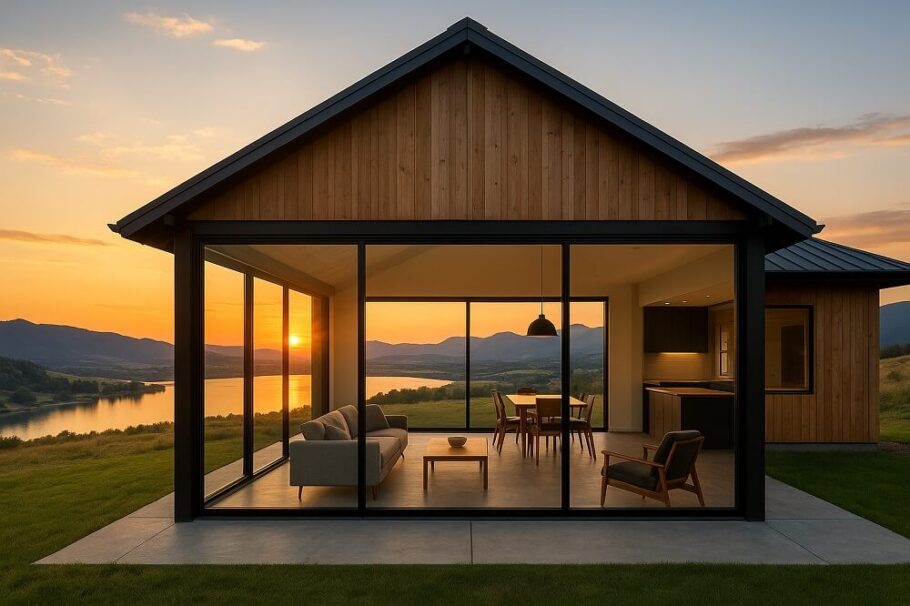
The barndominium has officially shed its rural, utilitarian reputation. Once considered a budget-friendly alternative to traditional stick-built homes for acreage owners, the humble barndo has evolved into a legitimate force in mainstream residential architecture. These metal-clad structures are embracing sophistication, sustainability, and serious design innovation. Forget the basic red barn with a few windows tacked on. The barndominium of 2026 looks nothing like its predecessor.
The Rise of the Dark Exterior Palette
Walk through any barndominium showcase or scroll through builder portfolios, and one thing becomes immediately obvious: color is getting darker. Charcoal, midnight blue, forest green, and even true black have overtaken the classic white and cream exteriors that dominated the past few years. Deep bronze standing seam roofs paired with jet black windows create a striking silhouette against rural landscapes and suburban lots alike.
This shift toward darkness serves more than just aesthetics. Darker metal panels absorb heat during colder months, providing passive solar gain that reduces heating costs. Manufacturers have responded with improved cool-roof technologies that prevent these dark surfaces from becoming heat traps in summer. The result gives homeowners the dramatic curb appeal they want without sacrificing energy performance.
Integrated Solar Becomes Invisible
Solar panels on barndominiums are nothing new. What has changed dramatically for 2026 is how those panels integrate into the structure. Building-integrated photovoltaics, or BIPV, have finally reached the point where solar cells disappear entirely into the metal roofing and siding. Standing seam roofs now come with thin-film solar laminates that mimic the appearance of traditional metal panels perfectly. From ground level, nobody can tell the difference.
This matters enormously for barndominium owners who want renewable energy without compromising the clean lines that make metal homes so appealing. No more bulky rack-mounted panels interrupting the roof plane. No more visible wires or external conduit running down the siding. The technology has matured to the point where the entire south-facing roof surface becomes a power plant while looking exactly like a standard metal roof.
The Warm Industrial Interior
Inside the 2026 barndominium, the cold, gray industrial aesthetic has softened considerably. Designers have moved toward what industry professionals call warm industrial—a blend of exposed metal structure with natural materials that bring texture and comfort. Wood plays a starring role here, but not the reclaimed barn wood look that defined early barndominiums. Instead, clean-finished white oak, walnut, and hickory appear on accent walls, ceiling beams, and floating shelves.
Concrete floors remain popular, but they now receive acid stains in warm earth tones or polished finishes that reflect light rather than absorbing it. Radiant heating tubes embedded in those concrete slabs have become standard, not optional. The combination of warm floors beneath natural wood elements creates a space that feels nothing like a workshop conversion. Metal posts and beams stay exposed, celebrating the building’s structural honesty, but they receive powder coating in matte black or bronze rather than leaving raw galvanized finishes.
The Disappearing Workshop
A fundamental shift in how people use barndominium space has emerged for 2026. The traditional model of a massive shop area occupying half the building with living quarters tucked into the corner is fading. Homeowners increasingly demand that the workshop portion remain completely invisible from living spaces. This means fully separated zones with dedicated entrances, soundproofing between sections, and exterior treatments that hide garage doors from the home’s main facade.
Some builders have begun designing barndominiums with workshop access from the rear only, placing the living quarters across the entire front elevation. Others have pushed shop spaces into separate outbuildings altogether, leaving the main structure dedicated entirely to living. When workshops do share the same roof as living areas, expect to see massive sliding barn doors between zones that seal completely when closed, along with dedicated HVAC systems that prevent fumes and dust from migrating into the home.
Exterior Living as Primary Space
The line between indoors and outdoors has blurred to the point of near disappearance in high-end barndominium design for 2026. Covered patios, screened porches, and outdoor kitchens now receive the same design attention as interior rooms. The metal roof extends dramatically beyond exterior walls to create deep overhangs—often twelve feet or more—that shade windows from summer sun while protecting outdoor living areas from rain.
These outdoor spaces feature the same flooring materials found inside, creating seamless transitions through massive sliding glass doors. Radiant heating loops sometimes extend into concrete patios to melt snow or simply warm bare feet on cool evenings. Outdoor fireplaces and fire pits have become standard rather than luxury additions. For many barndominium owners, the covered outdoor room sees more daily use than the formal living space inside.
Loft Living Reimagined
The classic barndominium loft space—that open area overlooking the main living room—has undergone a serious upgrade. Instead of a single railing and a view down to the couch below, 2026 lofts function as fully realized rooms. Glass railings have replaced wooden balusters, preserving sight lines while adding a contemporary touch. Many lofts now include built-in desk areas, wet bars, or small home gym setups.
Ceiling heights in these loft spaces have increased as well. Where older barndominiums often crammed lofts into whatever vertical space remained after the main floor, new designs intentionally raise the entire structure to allow eight-foot walls upstairs. Dormer windows punch through the metal roof to bring natural light deep into loft areas. Some custom builds have incorporated rooftop decks accessed from the loft level, complete with metal railings and outdoor seating.
Smart Metal Systems
Technology integration has finally caught up with barndominium construction. Metal buildings present unique challenges for wireless signals, and 2026 designs address this head-on. Builders now routinely install faraday cage mitigation strategies including signal-boosting repeaters, exterior antennas wired to interior access points, and strategic placement of wooden interior walls that allow signals to pass where metal framing would otherwise block them.
Beyond connectivity, the barndominium of 2026 functions as a fully integrated smart home. Automated blinds adjust to track the sun’s position, protecting furniture while maximizing natural light. Leak detection sensors install at every plumbing connection—particularly important given the long water lines often found in rural barndominium sites. Exterior cameras and motion sensors tie into lighting systems that illuminate pathways when someone approaches after dark. All of this operates through centralized hubs that hide within the building’s mechanical rooms.
Material Innovation Beyond Steel
While steel remains the primary structural material and exterior cladding of choice, 2026 has brought new players into the barndominium material palette. Fiber cement panels in wood grain finishes appear on accent walls and gable ends, offering the look of timber without the maintenance. Corrugated metal in smaller rib profiles creates more refined exterior textures than the agricultural-grade panels of the past.
Inside, porcelain slabs that mimic natural stone have replaced many tile and granite installations. These massive panels—some measuring five feet by ten feet—install with minimal grout lines and resist staining in ways natural stone cannot match. For barndominium owners who want the luxury look without the upkeep, porcelain has become the go-to choice for kitchen counters, bathroom vanities, and fireplace surrounds.
The Single-Story Preference
Two-story barndominiums enjoyed a long run at the top of buyer wish lists, but 2026 shows a decisive shift toward single-story living. The aging population of barndominium owners drives much of this change, but practicality plays an equal role. Single-story designs eliminate the need for massive lofts that waste conditioned air upward. They also simplify construction, reducing the structural engineering required for second-floor loads.
These ranch-style barndominiums spread horizontally across their sites, often incorporating wings connected by glass hallways or covered breezeways. The master suite occupies its own zone at one end of the building, while guest rooms and home offices cluster near the main entry. Workshop spaces, when included, attach at the opposite end from sleeping areas. This zoning approach creates privacy without requiring vertical separation.
Sustainable Water Systems
Rural barndominium sites have always dealt with water independence through wells and septic systems. The 2026 version takes this several steps further. Rainwater collection has moved from a backup system to the primary water source for many new builds. Gutters and downspouts feed into buried cisterns sized to provide months of household water. Multi-stage filtration systems make this captured rain potable and pleasant to drink.
Greywater recycling has also gained traction, particularly in dryer regions. Water from sinks and showers gets filtered and reused for toilet flushing or landscape irrigation. Some systems integrate with greenhouse additions, sending nutrient-rich household water to hydroponic growing operations. These closed-loop systems appeal to the same self-sufficiency mindset that draws people to barndominium living in the first place.
The Takeaway for 2026
Barndominium design has matured into a legitimate architectural category with its own trends, technologies, and aesthetic language. The 2026 model balances the raw honesty of metal construction with the warmth and comfort of modern residential design. Dark exteriors, invisible solar integration, warm industrial interiors, and smart systems hidden within smartly zoned floor plans define this moment in metal home evolution.
What makes these trends particularly exciting is their accessibility. Many of the innovations driving 2026 barndominium design—integrated solar, signal-boosting technology, advanced water systems—add cost but also add value. The result is a building type that continues to attract everyone from first-time rural homeowners to empty nesters seeking lower-maintenance living.