
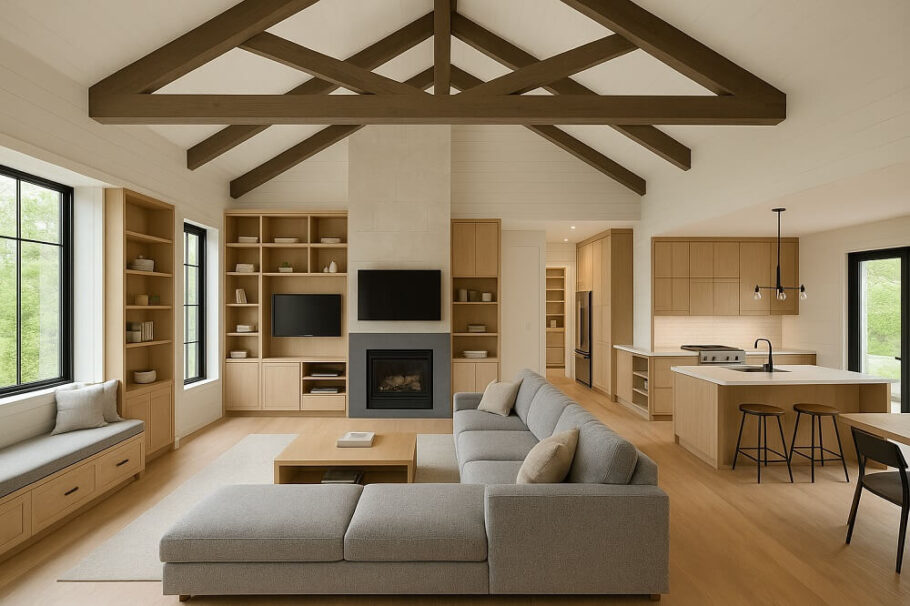
There is something undeniably captivating about the modern barndominium. The soaring ceilings, the expansive concrete slabs, and the skeletal beauty of exposed steel trusses offer a blank canvas that traditional stick-built homes simply cannot match. However, for many new “barndo” owners, that wide-open metal shell presents a unique challenge: How do I make this massive, rectangular space feel like a warm, functional home without wasting a single square foot?
While a barndominium offers immense square footage, the layout often defaults to a “big box” feel. Without the constraints of load-bearing interior walls, it is easy to let spaces bleed into one another inefficiently. Whether you are building a 2,000-square-foot retirement retreat or a sprawling 5,000-square-foot family compound, maximizing space isn’t about making things bigger—it’s about making them smarter.
Here is how to transform your steel structure from a cavernous shell into a meticulously efficient, multi-functional home.
1. Embrace the “Zoned” Open Concept
The open floor plan is the barndominium’s greatest asset, but “open” should not mean “vague.” The key to maximizing usable space is creating distinct zones without building physical walls that break up the flow.
Define with Furniture Placement
In the great room, use furniture to create invisible walls. A large sectional sofa with its back to the dining area naturally separates the living room from the eating space. A long, low console table placed behind the sofa can act as a divider while offering a place for lamps and decor.
Strategic Flooring Changes
Visual cues are powerful. Changing the flooring material as you move through the space tricks the eye into perceiving separate rooms. Use large-format tile or stained concrete in the kitchen and entryway (easy to clean), then switch to luxury vinyl plank or engineered hardwood in the living area to signal a transition. In the bedrooms, carpet adds warmth and defines those spaces as private sanctuaries.
2. Go Vertical: The Overlooked Asset
If your barndominium has standard 8-foot ceilings, you are missing out on one of the biggest perks of the build. Most barndos feature ceilings ranging from 12 to 20 feet high. This vertical real estate is pure gold for maximizing space.
Leverage the Loft
If your structure allows for it, a loft is the ultimate space multiplier. It turns dead air into liveable square footage. A loft overlooking the living room can serve as a home office, a game room, or overflow guest sleeping quarters. It keeps the main floor feeling open while discreetly adding function.
Vertical Storage Solutions
In a barndominium, wall space is prime real estate. In the kitchen, run cabinetry all the way to the ceiling. Use a rolling library ladder to access those top shelves where you store holiday decorations or rarely used small appliances. In the living area, install floor-to-ceiling built-in bookshelves. This draws the eye upward, emphasizing the height of the room while providing immense storage that a single bookshelf on the floor could never offer.
3. The Power of Built-Ins
Because barndominiums often lack the alcoves and corners found in traditional homes, furniture that floats in the middle of the room can sometimes look lost. Built-in furniture anchors the space and eliminates the need for bulky standalone pieces that waste floor area.
Window Seats with Storage
If you have large picture windows (which are common in barndos), build a window seat into the base. It provides a cozy nook for reading and, more importantly, lifts up to reveal deep storage for blankets, board games, or off-season clothing.
Mudroom Lockers
The entryway from the garage or the main door is often a dumping ground. Instead of letting coats pile up on a hook, build a floor-to-ceiling mudroom locker system. Assign a locker to each family member. This consolidates shoes, bags, and jackets into a footprint that is half the size of a traditional coat closet.
4. Reimagine the Kitchen Layout
In a barndominium, the kitchen is usually the heart of the home, and it has a tendency to sprawl. To maximize it, you need to shorten the distance between key work zones.
The Working Triangle and Islands
Do not let the open space push your sink, fridge, and stove too far apart. Keep them within a comfortable radius. Your kitchen island should be a workhorse. Instead of a standard counter-height slab, consider a two-tiered island: one level for meal prep and cooking, and a raised bar-height section on the opposite side for seating. This hides the mess from the living room view while providing extra seating without needing a separate dining table.
Appliance Garages
With all that open space, countertops can quickly become cluttered with coffee makers, toasters, and blenders. Build an “appliance garage” into your cabinetry. This is a lift-up or roll-top door that hides small appliances when not in use, keeping your expansive countertops clear for prep work.
5. The Sleeping Quarters: Privacy Pods
While the main living area is open and airy, the bedrooms should function as efficient private pods. This is where you can borrow ideas from tiny home design to maximize comfort in a smaller footprint.
Use Pocket Doors
In a traditional home, a bedroom door needs a swing radius that takes up floor space. In a barndominium, where you might have a hallway leading to bedrooms, install barn doors or pocket doors. They slide into the wall, freeing up the floor space that would otherwise be a “door zone.”
Platform Beds with Drawers
Instead of a traditional bed frame, build or buy a platform bed with deep integrated drawers underneath. This replaces the need for a bulky dresser, freeing up wall space and making the room feel larger and easier to navigate.
6. Don’t Forget the “Shop” Integration
One of the unique aspects of a barndominium is the potential connection between living quarters and workshop or garage space. Maximizing space here means controlling the bleed-over.
The Transition Zone
If your living space connects directly to the shop, create a transition zone. This is a small room or hallway where you can take off dirty boots and coveralls before entering the main home. It prevents dirt from migrating into the living space and keeps your home cleaner for longer.
Overhead Shop Storage
In the shop area, maximize space by going up. Use heavy-duty overhead ceiling racks to store lumber, totes, and seasonal items. This keeps the concrete floor clear for parking vehicles or working on projects, effectively doubling the functionality of the shop footprint.
7. Harness Natural Light Strategically
Light makes a space feel bigger. Barndominiums are famous for their steel construction, which can sometimes feel industrial or dark if not planned correctly.
Reflective Surfaces
Use light-colored walls and high-gloss finishes on floors to bounce natural light deeper into the room. If you have a large barndo, consider installing solar tubes in interior hallways or bathrooms that don’t have direct access to windows. They channel sunlight from the roof down into the room, eliminating the need for artificial light during the day and making tight spaces feel expansive.
Window Placement
When designing, prioritize windows on adjacent walls rather than just one wall. Light coming from two directions (cross-lighting) eliminates harsh shadows and makes the entire interior feel brighter and more spacious.
8. Multipurpose Rooms are Key
In a traditional home, you have a dining room, a living room, and an office. In a well-maximized barndominium, one room does three jobs.
The Flex Room
If you have a spare bedroom, furnish it as a hybrid space. A Murphy bed allows it to serve as a home gym or office 90% of the time, and a guest room the other 10%. In the living area, choose a storage ottoman that acts as a coffee table, a footrest, and a place to hide remote controls and magazines.
Conclusion
Maximizing space in a barndominium isn’t about squeezing more rooms into a floor plan. It is about respecting the integrity of the wide-open structure while injecting intelligence into every corner. It is the difference between living in a building and living in a well-designed home.
By zoning your open areas, building up instead of out, and choosing furniture that works as hard as you do, you can ensure that every square foot of your barndominium serves a purpose. Whether you are watching the sunset through a 20-foot window or tucked away in a cozy built-in reading nook, a well-planned barndo offers a lifestyle that is both grand and intimately functional.