
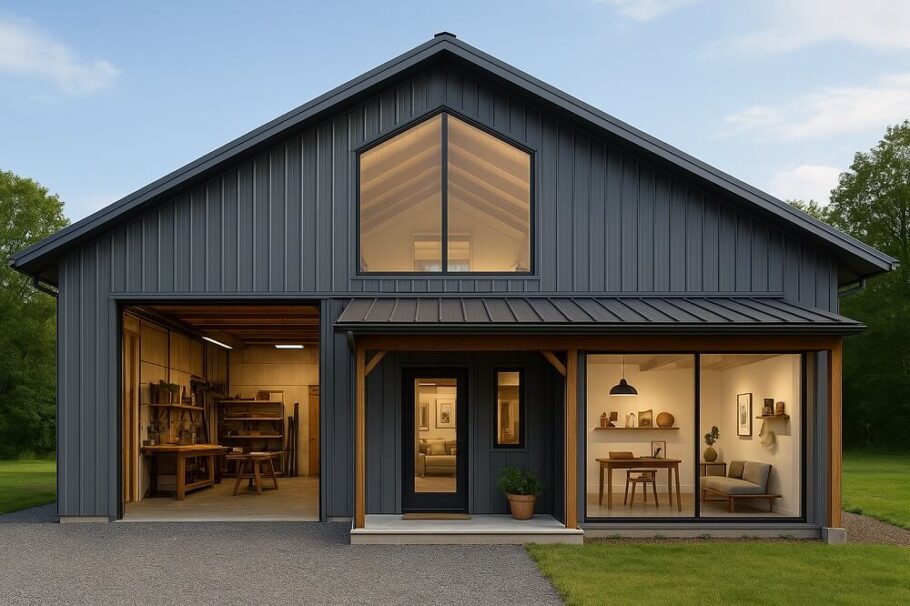
There was a time when driving past a metal building on rural land meant you were looking at a storage shed, a workshop, or a large livestock barn. But over the last decade, that unmistakable silhouette has undergone a radical transformation. The “barndominium”—a portmanteau of barn and condominium—has exploded in popularity, and it’s easy to see why.
These structures offer the wide-open floor plans of a warehouse with the cozy comforts of a home. They are durable, often more cost-effective to build than traditional stick-frame houses, and surprisingly energy-efficient. However, the defining feature of any barndominium is its exterior. It’s the first thing the neighbors see, and it sets the tone for everything inside.
Whether you are in the early stages of planning or just gathering inspiration, the exterior design of your barndominium is your chance to make a statement. Do you want it to look like it has been standing on the prairie for a hundred years? Or do you want it to look like a sleek, modernist art gallery? The beauty of the barndominium is its versatility. Let’s walk through the spectrum of design ideas, from the rustic and classic to the bold and contemporary.
The Classic Farmstead: Honoring Rural Roots
For many, the appeal of a barndominium lies in its agrarian heritage. The classic farmhouse aesthetic is timeless, evoking feelings of warmth, simplicity, and a connection to the land. If you want your home to look like it belongs on the cover of a rustic lifestyle magazine, this is your lane.
The hallmark of the classic barndominium exterior is the metal roof. Usually standing seam or corrugated metal in colors like barn red, charcoal gray, or forest green, this roof is both practical and iconic. It sheds snow and rain effortlessly and lasts for decades.
To soften the industrial look of the metal, classic designs incorporate significant wood elements. Imagine a wide, covered front porch supported by large, rough-hewn timber posts. This isn’t just a design choice; it’s a lifestyle feature. It’s where you put your rocking chairs, hang a swing, and watch the sunset.
Material mixing is key here. While the shell might be metal, combining it with stone or brick on the lower third of the facade grounds the building. A stone wainscot running along the bottom of the walls gives the illusion that the structure has been anchored to the site for generations. Board and batten siding, painted white or a soft cream, is another classic choice for gable ends or as an accent around the main entry.
When it comes to windows and doors, think black or dark bronze frames. These provide a stark, beautiful contrast against lighter siding or stone. Arched windows or barn-style sliding doors on the patio add that extra touch of authenticity. Landscaping is simple: think wildflowers, gravel driveways, and maybe a split-rail fence to complete the pastoral picture.
The Transitional Barn: Modern Comfort with Rustic Warmth
Perhaps you love the idea of a barn home, but you don’t want to feel like you’re living in a pioneer museum. The transitional style is the perfect middle ground. It takes the familiar shape of the barn—the steep roof pitches, the simple gables—and updates it with cleaner lines and more refined materials.
In a transitional design, the color palette shifts from earthy tones to more neutral, sophisticated hues. Think shades of greige, warm gray, or charcoal. You might still use wood, but it’s often used in a more controlled way. Instead of rough-hewn logs, you might see smooth cedar planks used vertically as an accent around the garage door or on a feature wall flanking the front door.
The porch remains an important element, but it is often more streamlined. The posts might be square, craftsman-style columns on top of stone piers, rather than entire logs. The goal is to look intentional and polished.
Lighting plays a huge role here. Lantern-style lighting with clean, geometric shapes replaces the overly rustic wagon-wheel fixtures. Windows are larger and placed in symmetrical arrangements, allowing for plenty of natural light while maintaining the barn’s structural integrity.
A popular trend in transitional barndominiums is the use of timber frame accents exposed on the exterior. You might have a covered entryway where the interior ceiling of the porch reveals beautiful heavy timber trusses. This gives you that “wow” factor of craftsmanship without overwhelming the clean silhouette of the building.
The Contemporary Barndominium: Architectural Art
If you really want to push the envelope, the contemporary barndominium is where architecture meets art. This style sheds almost all references to the rustic past in favor of stark geometry, industrial materials, and a strong connection between indoor and outdoor spaces.
The most significant shift here is the roof line. While classic barns have simple A-frames, contemporary designs often feature mono-sloped (shed) roofs. These asymmetrical lines create incredible volume inside and allow for massive expanses of glass on the tall walls.
Glass is the star of the contemporary exterior. We aren’t talking about a few double-hung windows here. We’re talking about floor-to-ceiling sliding glass walls, massive pivot doors, and clerestory windows that run the length of the building. The idea is to blur the line between the interior living space and the landscape outside.
Materiality becomes very sleek. You might see a combination of:
- Cor-ten steel: This weathering steel develops a rust-like appearance that is actually a protective layer. It gives the home a dramatic, sculptural look that requires zero maintenance.
- Concrete: Whether used for site walls, planters, or as a primary cladding material, concrete adds an undeniable sense of permanence and modernism.
- Fiber Cement Panels: Large-format panels (like HardiePanel) create a smooth, seamless look that is far removed from traditional lap siding.
In contemporary design, the garage doors are often integrated into the facade as a feature, not an afterthought. Using glass-paneled garage doors or doors with a modern, horizontal rib pattern makes them part of the overall design language.
The landscape around a contemporary barndominium is equally minimalist. Think xeriscaping with gravel, ornamental grasses, and stark boulders rather than flower gardens. It’s a look that says you appreciate design, function, and the raw beauty of the materials.
Playing with the Palette: Color and Texture
Regardless of the style you choose, the combination of colors and textures will make or break your design. The barndominium is a large structure, so the exterior cladding needs to be broken up visually to avoid a monolithic, warehouse-like appearance.
The 70/30 Rule: A safe and effective approach is to use one primary material on about 70% of the home (usually the metal siding) and a secondary, contrasting material on the other 30% (the gable ends, the porch columns, or the entry tower). For example, a dark gray metal body with a light wood gable end creates instant visual interest.
Bold Colors are Back: While white and black will always be stylish, we are seeing a rise in bold color choices. Deep navy blues, sage greens, and even matte black barndominiums are becoming more common. These dark colors help the structure recede into a wooded backdrop or make a powerful statement against a snowy white landscape. Just remember that dark colors absorb heat, which can be a bonus in cold climates but a drawback in hot, sunny areas.
The Warmth of Wood: Wood is the great softener. Whether it’s cedar, cypress, or reclaimed barn wood, using it sparingly—like on a soffit, a ceiling, or a single accent wall—brings warmth and a human scale to the metal building.
Roofing and Architectural Details
Don’t overlook the “fifth facade”—your roof. In a barndominium, the roof is a massive visual component.
- Standing Seam Metal: The gold standard. Its clean, vertical lines naturally draw the eye up, emphasizing the height of the structure. It comes in a variety of profiles and colors.
- Exposed Fastener Metal: More budget-friendly, this is the classic corrugated look. It’s perfect for a rustic or agricultural aesthetic.
- Dormers: Adding a dormer isn’t just for light in the loft; it breaks up a long roof line and adds curb appeal. Even if the dormer is purely decorative, it can add charm to a classic design.
- Cupolas: Those little lookout towers on top of barns? They are actually functional vents, but they add an undeniable charm and a finished look to the peak of the roof.
Landscaping and Site Orientation
Finally, remember that your barndominium doesn’t exist in a vacuum. How you place it on the land and how you approach the driveway and plantings matters immensely.
If you are going for a classic look, a long, winding gravel driveway lined with wildflowers sets the stage perfectly. For a contemporary home, a straight concrete driveway with precise geometric planting beds leads the eye directly to the architectural details of the facade.
Consider the approach. Do you want the home to be visible from the road, or tucked away behind a grove of trees? The journey to your front door is the preamble to the design story you are telling.
The Final Silhouette
Designing the exterior of a barndominium is one of the most exciting parts of the building process. You have the freedom to start with a blank canvas—a simple, rectangular box with a roof—and transform it into a home that reflects your personal style. Whether you wrap it in rustic wood and stone to honor the past, or encase it in glass and steel to look toward the future, the barndominium offers a unique blend of durability, space, and design potential that traditional homes simply can’t match.
Take your time driving through rural areas, flipping through architectural digest, or scrolling through design blogs. Find the silhouette that speaks to you. Once you have the shape and the skin defined, you’ll be amazed at how quickly that old metal building starts to feel like home.