
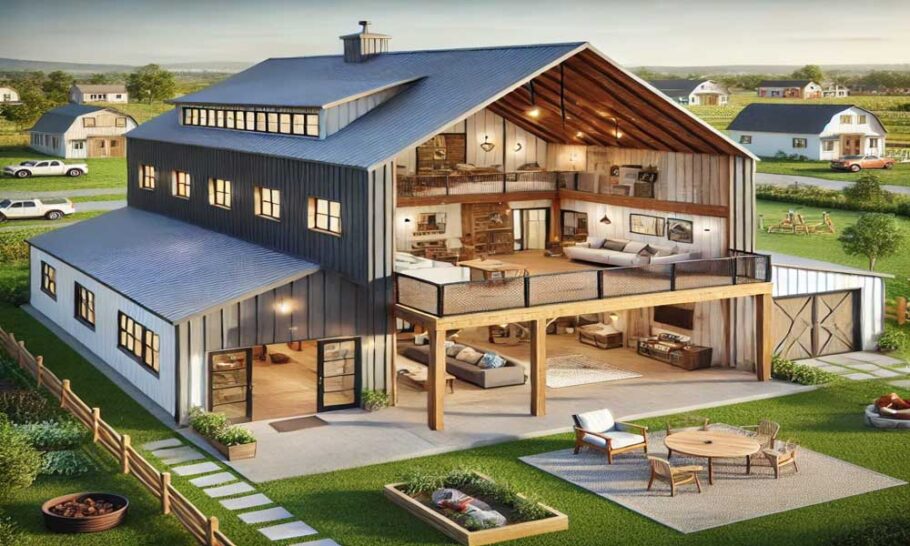
There was a time not too long ago when the mention of a “barndominium” conjured images of a converted cattle shed with a concrete floor and a hay loft. Today, that perception has been flipped on its head. The barndominium has evolved into one of the most exciting trends in residential architecture, representing a perfect storm of affordability, durability, and aesthetic freedom.
Whether you are scrolling through Pinterest, saving Instagram reels of sprawling kitchen islands under vaulted ceilings, or you’re a farmer looking to maximize utility, the barndominium offers a blank slate that traditional stick-built homes simply can’t match. But designing one requires a shift in mindset. You aren’t just picking out paint colors; you are engineering a lifestyle within a steel or post-frame box.
If you are ready to embark on this journey, here is everything you need to know about designing a barndominium that doesn’t just look good on paper, but functions perfectly for the way you live.
The “Why” Behind the Metal Walls
Before we dive into floor plans and finishes, it’s worth understanding why you might choose this route over a traditional home. The barndominium isn’t just an aesthetic choice; it’s a structural one.
First, there is the speed of construction. Because the exterior shell goes up quickly, you are protected from the elements sooner, allowing interior work to progress without weather delays. Second, there is the open span. Unlike traditional homes that rely on load-bearing interior walls, barndominiums (especially those using steel I-beams or rigid frames) allow for massive, uninterrupted spaces. This is the secret behind those cavernous great rooms and wide-open floor plans. Finally, there is the maintenance factor. Steel and metal siding don’t require painting every few years, and they are resistant to pests and rot.
However, design is where you turn that shell into a sanctuary.
Step 1: Defining the “Living” Space vs. The “Barn” Space
The biggest mistake first-time barndominium designers make is treating the entire structure as one big house. A successful design clearly delineates the living quarters from the shop or storage area.
You need to decide early on what ratio you want. Are you building a 60/40 split, where the living space is dominant? Or are you looking for a 30/70 split, where the shop is the star and the living quarters are just a comfortable place to crash?
This decision dictates everything: the placement of plumbing stacks, the HVAC zoning, and the insulation barriers. You don’t want to pay to heat and cool a massive shop bay if you only use it for storage. Conversely, if you are a mechanic or woodworker, you want to ensure your living space is sealed tight against the fumes and dust from the work area. A well-designed barndominium often places the living quarters at one end of the structure, with a sealed, fire-rated wall separating the residential space from the workshop.
Step 2: The Exterior Skin and Structural Bones
When designing the exterior, you have to look beyond the standard “pole barn” look. Modern barndominium design is all about blending materials.
While the primary structure might be steel or wood posts, consider mixing in different cladding materials to break up the mass. Adding stone or brick wainscoting to the bottom third of the exterior walls can ground the building and give it a sense of permanence. Using board and batten siding on gable ends or porch gables can soften the industrial look.
Furthermore, think about the roofline. A simple box is easy and cost-effective, but adding a wraparound porch with a separate roof line, or bump-outs for window seats, adds architectural interest. The “bones” of the building—whether you choose red iron steel for wide spans or a post-frame construction—will determine how much flexibility you have with those interior clear heights. If you want a loft or a second story, you need to ensure your structural design accommodates that weight from the very beginning.
Step 3: Mastering the Open Floor Plan (Without It Feeling Like a Gymnasium)
The interior of a barndominium is a double-edged sword. That vast, open space is a dream for entertaining, but it can easily feel like an airplane hangar if not properly “furnished” architecturally.
The key to a great open floor plan is creating distinct zones without using full-height walls. You define these zones through furniture placement, area rugs, and changes in flooring material. But in a barndominium, you have an even more powerful tool: the ceiling.
Because you lack an attic, your ceiling is often the underside of the roof deck. Use this to your advantage. If you have a large great room, designate a specific area for the living room and use ceiling strapping or treated lumber to create a “ceiling feature” just over that space. This visual compression makes the space feel cozy, while the rest of the area soars up into the rafters.
Another trick is the use of interior non-load-bearing walls that are built as “pony walls” or half-walls. These can separate a foyer from the living room, giving you a place to drop your keys without blocking the sightlines to the kitchen.
Step 4: The Kitchen—The Heart of the Home (and the Structure)
In a barndominium, the kitchen isn’t just a room; it’s often the central hub, sitting right in the middle of the action. Because you have the structural ability to go without support beams, you can place a massive island in the center of the space.
When designing your kitchen, think about the work triangle in the context of this volume. You will likely have high ceilings, which means your upper cabinet space might be unreachable. Instead of standard uppers, consider floor-to-ceiling pantry cabinets on one wall for storage, and use the space above the island for a statement range hood that actually has room to breathe.
Ventilation is crucial here. Because barndominiums are built tighter than old barns, you need a high-quality range hood that vents to the outside, not just a recirculating filter. You are cooking in the same airspace as your living room, so smells and smoke will travel instantly.
Step 5: The Great Thermal Debate—Insulation and HVAC
This is the least glamorous but most critical part of barndominium design. If you get this wrong, you will have a condensation-dripping, energy-sucking nightmare.
You cannot insulate a metal building the same way you insulate a wood-framed house. The primary method for barndominiums is spray foam insulation, specifically closed-cell foam. Why? Because it does two jobs at once: it provides an air seal and insulation.
Steel conducts temperature. In the winter, if warm, moist inside air hits a cold steel panel, you get condensation. Condensation leads to rust, mold, and ruined drywall. Spray foam adheres directly to the metal, creating a thermal break. It stops that warm air from ever touching the cold steel.
When designing your HVAC system, remember that these spaces have high cubic footage. You need to calculate the volume of air, not just the square footage. Consider installing an HVAC system with multiple zones, especially if you have a second-floor loft or bedroom area. Heat rises, so your upstairs will naturally be warmer; zoning allows you to balance that without freezing out the downstairs.
Step 6: The Lofty Dilemma
Many barndominium designs feature a loft overlooking the main living area. It’s a classic look that utilizes the vertical space. However, you need to design this with acoustics and privacy in mind.
An open loft acts as a balcony to the living room below. Every conversation, every TV show, and every footstep travels directly into that open space. If you plan to use the loft as a bedroom or a home office, consider designing it with a half-wall and glass panels, or even a sliding barn door system, to close it off from the main area while still allowing light to filter through.
Also, ensure the floor structure of the loft is robust enough to handle the span. There is nothing worse than a bouncy bedroom floor.
Step 7: Let There Be (Natural) Light
Barndominiums have a reputation for being dark, industrial caves. This is a design problem that is easily solved. When you design a traditional home, you place windows where they fit. When you design a barndominium, you place the steel framing, and then you punch holes in it.
Because the structure relies on columns spaced anywhere from 8 to 20 feet apart, you have the freedom to put massive windows or glass sliders between those columns. Don’t be shy about it.
Go for floor-to-ceiling windows in the living room. Install a wall of glass sliding doors that open onto a patio. Consider adding clerestory windows—a band of windows high up near the roofline. These allow light to pour in while maintaining privacy and wall space for furniture below. If your budget allows, incorporating a “sawtooth” roof design or skylights can flood the interior with daylight, completely transforming the steel structure into a bright, airy home.
Step 8: Interior Finishes—Softening the Steel
The interior design of a barndominium should be a curated mix of industrial and organic. You have the industrial bones (steel, concrete, wood trusses), so you need to soften them with texture.
Consider using luxury vinyl plank (LVP) flooring that looks like reclaimed wood. It’s durable enough for the shop-to-house transition and warmer underfoot than polished concrete. If you have steel columns exposed in the middle of a room (which is common), don’t try to hide them. Embrace them. Wrap them in reclaimed wood or paint them a matte black to make them a design feature.
Drywall is the standard for interior walls, but don’t forget the ceiling. If you leave the metal roof deck exposed, it can feel a bit cold. However, if you install a ceiling with stained tongue-and-groove planking between the trusses, you create warmth and acoustic dampening.
Step 9: The Outdoor Connection
One of the best design features of a barndominium is the ability to extend the roofline to create massive covered outdoor living spaces. Because the roof structure is so strong, you can easily cantilever a portion out or extend the main roof over a patio.
Design your porch to be a true outdoor room. Pour a concrete slab that extends from the interior flooring out onto the porch. Install an outdoor kitchen, a fireplace, or TV mounts. In many climates, this covered space effectively doubles your living area for nine months out of the year.
The Blueprint for Your Future
Designing a barndominium is an exercise in thoughtful compromise. You are balancing the rugged efficiency of agricultural architecture with the comfort and detail of residential living. It requires you to think ahead about how air moves, how light travels, and how you transition from the muddy boots of the workshop to the plush carpet of the bedroom.
But when you get it right, the result is a home that feels grounded, spacious, and uniquely yours. It’s a place where you can park your tractor next to your dining room, host a party for fifty people without feeling cramped, and watch the sunset through a wall of glass from the comfort of your sofa. That is the true promise of the barndominium lifestyle.