
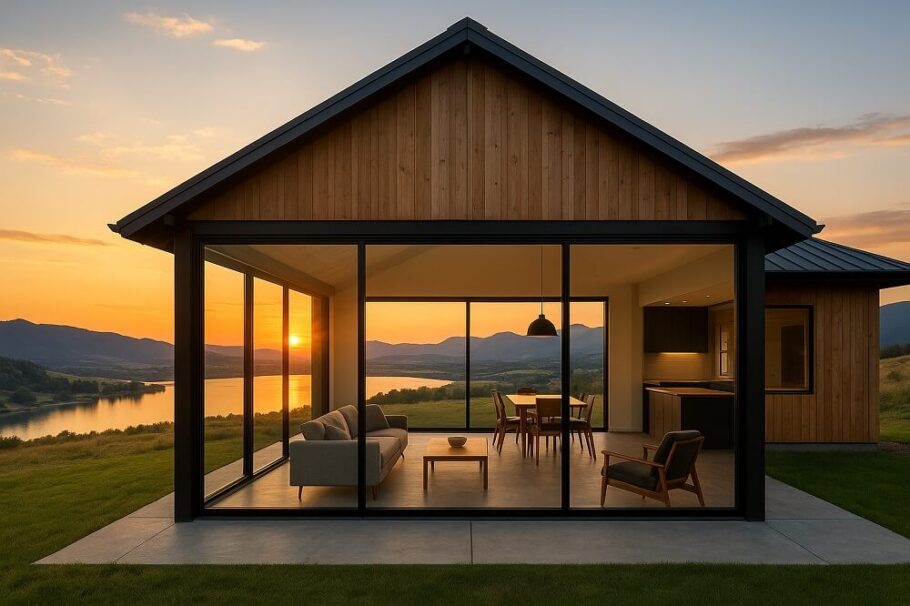
There’s no denying the allure of the barndominium. The open-concept layouts, the soaring ceilings, the industrial-chic aesthetic that blends rustic warmth with modern minimalism—it’s a dream for many looking to escape the confines of traditional suburban construction.
But before you get lost in Pinterest boards of epoxy floors and sliding barn doors, we need to have a serious conversation about what holds the whole place up.
Structural integrity.
It isn’t the sexiest topic, I know. You won’t find it featured in a lifestyle magazine spread. But when it comes to a barndominium—a building type that blurs the lines between agricultural utility and residential comfort—understanding the bones of the structure is the difference between a forever home and a money pit.
Here is what you absolutely need to know about the structural integrity of your barndominium, from the foundation up.
The “Red Iron” Difference: Why Steel Matters
If you are researching barndominiums, you’ve likely heard the term “red iron” thrown around. In the world of post-frame construction, red iron (or rigid steel frame) is the gold standard.
A lot of people make the mistake of assuming a barndominium is built like a giant shed. They imagine thin-gauge metal slapped onto wooden trusses. While that method might keep the rain off a tractor, it is rarely sufficient for a home where you plan to raise a family.
Red iron steel is pre-engineered. This means that before a single bolt is tightened, an engineer has calculated the exact load the building can handle. We aren’t just talking about the weight of the metal roof. We are talking about live loads and dead loads.
- Dead Load: The weight of the building materials themselves.
- Live Load: The variable weight the structure must support. This includes snow piling up on the roof in the winter, wind shear during a storm, and even the seismic activity in certain zones.
A properly engineered steel frame acts like a skeleton. It is designed to flex slightly under pressure (like heavy wind) rather than snapping. This ductility is crucial. If you are building in an area prone to tornadoes or heavy snow, the difference between a bolted, engineered steel frame and a nailed wooden frame could be the difference between your home staying put or ending up in the next county.
The Foundation: The Silent Partner
We often look up at the massive structure of a barndominium, but the real secret to its longevity is buried in the ground.
Because a steel frame is incredibly strong, it also incredibly heavy and rigid. If the foundation shifts or settles unevenly—a phenomenon known as differential settlement—the steel frame doesn’t bend to accommodate it. Instead, that force transfers directly to the connections. Bolts can shear. Panels can rack.
There are generally two types of foundations used in barndominium construction:
- The Slab on Grade: This is the most common residential foundation. A concrete slab is poured, usually with thickened edges, and the steel frame sits on top of it, anchored by embedded bolts.
- The Pier and Beam: This is more common in agricultural buildings or in areas with difficult terrain.
For structural integrity, the key isn’t just the type of foundation, but the soil preparation. A contractor must ensure the soil is compacted correctly. If you have expansive clay soils that swell when wet and shrink when dry, a standard slab can crack under the pressure of the steel frame. In these cases, deep concrete piers might be necessary to anchor the structure down to stable soil below the frost line or the clay layer.
Warning Sign: If a builder tells you they can pour a slab without a geotechnical soil report, run. You need to know what is under your building before you put a multi-ton steel structure on top of it.
The “Condo” Effect: Load-Bearing Interior Walls
Here is where barndominiums differ vastly from traditional homes.
In a standard stick-built house, the interior walls are often load-bearing. They help hold up the second floor or the roof. This is why you can’t just knock down a wall in an old farmhouse without putting a beam in first.
In a true red-iron barndominium, the steel frame is the only thing holding up the roof. The exterior walls are essentially infill.
This is a massive advantage for structural integrity. Because the interior walls are not holding anything up, you can arrange the floor plan however you like without worrying about compromising the building’s shell. It also means that if a interior wall gets wet or develops mold, it can be torn out and replaced without a jackhammer or a structural engineer signing off on it.
However, this freedom comes with a caveat. Because the interior walls aren’t load-bearing, they are often built lighter—typically with metal studs or standard wood framing. This is fine for daily living, but it means they offer little resistance to lateral (side-to-side) forces inside the building. The rigidity must come from the steel frame and the external shear walls (the metal sheeting or the framed exterior walls).
The Roof: The Longest Span
One of the biggest aesthetic draws of a barndominium is the open span. You can have a living room with a 40-foot clear span ceiling—no pillars, no supports.
Achieving this requires massive roof trusses or rafters.
In a steel building, these are usually I-beams or bar joists. The structural integrity here relies on the “web” of the truss. You need to look at how the roof deck is attached to these supports. Screws and fasteners need to be rated for uplift.
Uplift is a phenomenon where wind getting under the eaves of a house actually tries to lift the roof off. Because barndominiums often have wide overhangs to create that classic farmhouse porch look, they present a big surface area for wind to catch. If the roof isn’t tied down to the walls, and the walls aren’t tied down to the foundation, the whole system can fail.
When reviewing your building plans, pay close attention to the clip angles and fastener schedule. These are the small metal brackets and screws that connect the roof to the walls. In high-wind events, these are the unsung heroes that keep the roof on.
Windows and Doors: The Weak Points
You can build a steel structure that could survive the apocalypse, but you still need to let light in.
Every window and door is a hole in the structural envelope. The integrity of the building around these openings is critical.
In metal-sided barndominiums, large windows require heavy-gauge framing around the rough opening. You cannot simply cut a hole in the sidewall and pop a window in. The steel panels need to be terminated and flashed correctly to prevent water intrusion, and the structural header above the window needs to transfer the load from the roof around the opening and down to the foundation.
If you want massive 12-foot sliding glass doors leading to a patio, you need to ensure the engineer has accounted for the lack of bracing in that wall section. Often, this requires a hefty steel header (a large beam) above the doors to redistribute the weight.
The Interior Environment: Condensation and Corrosion
Structural integrity isn’t just about wind and snow; it’s also about the slow, silent enemy: rust.
Steel is incredibly strong, but it hates moisture. When you live in a barndominium, you create a temperature differential between the inside and the outside. In humid climates, or during winter, this can cause condensation to form on the inside of the steel panels.
If that moisture drips down and sits on the base of your steel columns, or if it soaks into the bottom plate of your interior walls, you are setting the stage for corrosion and rot.
A truly structurally sound barndominium addresses this with a proper vapor barrier and insulation system. Spray foam insulation is the favorite child of the barndo world for a reason. It adheres directly to the metal, sealing out moisture and preventing the dew point from occurring within the wall cavity.
If a builder suggests using fiberglass batts in a standard metal building, be very cautious. Fiberglass allows air movement, which can lead to condensation behind the walls—rusting your structure from the inside out where you can’t see it until it’s too late.
The Importance of Engineered Stamped Plans
Finally, let’s talk about paperwork.
You cannot eyeball a barndominium. You cannot build it by feel.
Your structural integrity is only as good as the engineering behind it. You need to demand sealed engineer-stamped plans. This means a licensed professional engineer has reviewed the design for your specific location.
The engineering will account for:
-
- Wind speed ratings (specific to your county).
- Snow loads (specific to your elevation and region).
- Soil bearing capacity (from that soil test we mentioned).
If a supplier sells you a “standard kit” without custom engineering for your wind and snow zone, you are buying a liability. It might look fine for a few years, but the first 100-year storm will expose the shortcuts.
Conclusion
A barndominium is a fantastic blend of durability and design. When built correctly, it is one of the most resilient home types available. But that resilience hinges on understanding that it is an engineered system.
From the depth of the concrete piers to the gauge of the steel, and from the seal of the insulation to the bolts holding the frame down, every element plays a role in the structure’s ability to stand tall.
When planning your dream barndo, don’t just fall in love with the floor plan. Fall in love with the engineering behind it. Hire a builder who understands load paths, who won’t skimp on fasteners, and who insists on stamped plans.
After all, a beautiful home is only truly beautiful if it’s built to last.