
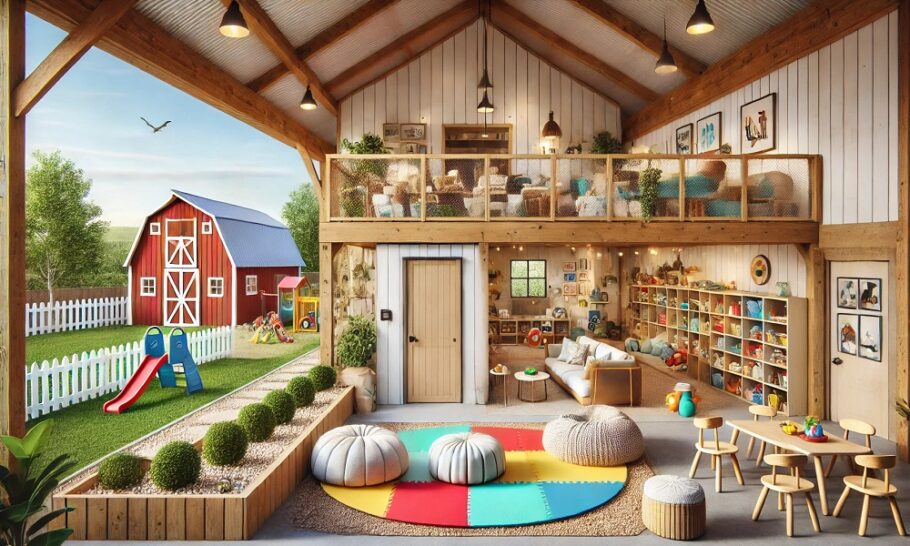
If you’ve spent any time researching barndominiums, you know they represent something refreshingly different from the standard suburban home. They offer wide-open floor plans, durable steel exteriors, and often sit on acreage where you can actually breathe. But that steel shell and those soaring ceilings—while stunning—present a unique challenge: how do you heat and cool them efficiently without going broke?
If you’re deep in the planning stages, you’ve likely come across a term that sounds both futuristic and ancient at the same time: geothermal heating and cooling. The concept of using the earth’s temperature to condition your home is intriguing, but is it actually a smart fit for a barndominium? Or is it just an expensive pipe dream?
Let’s dig into the practical realities of pairing geothermal HVAC with a barndominium. We’ll look at how it works, what it really costs, and whether your rural acreage is actually an advantage in this equation.
So, what exactly is Geothermal?
Forget the images of volcanoes and hot springs. For residential purposes, geothermal heating and cooling (often called ground-source heat pumps) leverages a simple, consistent fact of nature: just a few feet below the surface, the ground stays at a relatively stable temperature year-round. Depending on where you live, that might be around 45°F to 75°F .
A geothermal system doesn’t create heat by burning fuel; it moves heat. It uses a loop of buried pipes (the ground loop) filled with water or an antifreeze solution. In the winter, the fluid absorbs the earth’s heat and carries it indoors to your heat pump unit, which concentrates it and distributes it through your ductwork or radiant floor system. In the summer, the process reverses: it pulls heat from your barndominium and dumps it back into the cooler ground .
This isn’t just a different type of furnace; it’s a fundamentally different approach to comfort.
The Barndominium Factor: Why It’s Different Than a Stick-Built Home
Before we can declare geothermal “feasible,” we have to acknowledge the elephant in the room: your barndominium is essentially a metal building. Steel is an incredible conductor of heat. Without a superhero-level insulation strategy, you’ll be fighting an uphill battle against the elements. In the summer, that steel soaks up the sun and radiates heat inside. In the winter, it leeches your warmth right out.
This is precisely where the conversation about geothermal gets interesting. Because geothermal systems are incredibly efficient—often reducing energy usage by 25% to 50% compared to conventional HVAC —they can handle the heavier thermal load of a metal structure better than a struggling traditional unit. However, they can’t do it alone. Even the best geothermal system will fail if your barndominium is drafty and poorly insulated.
The Feasibility Checklist: Is Your Property a Candidate?
So, you’re intrigued. Now comes the hard part: determining if geothermal makes sense for your specific project. Based on expert insights, here are the critical factors :
- The Land Requirement (The “Rural” Advantage)
This is where barndominium owners often have a significant edge. Geothermal loops need space.
- Horizontal Loops: If you have acreage (which many barndominium owners do), you can install horizontal loops. Trenches are dug about 4-6 feet deep to lay the piping. This is generally the less expensive option because it involves trenching rather than deep drilling .
- Vertical Loops: If you’re on a smaller lot or the ground is too rocky for trenching, you’ll need vertical loops. This requires drilling boreholes 200-400 feet deep. It solves the space problem but adds significant cost due to the drilling equipment and labor required .
If your barndominium sits on a typical rural plot, you likely pass the land test with flying colors.
- The Ground Itself
You can’t just dig anywhere. The composition of your soil or rock matters. Installers will look for good thermal conductivity. Moist, sandy soils are fantastic for transferring heat. Rocky terrain or solid bedrock isn’t a dealbreaker, but it usually pushes you toward the more expensive vertical drilling option . A professional site assessment isn’t just a good idea; it’s essential.
- Your Appetite for Upfront Investment
Let’s be direct: geothermal is expensive to install. While a conventional high-efficiency HVAC system for a 2,000-3,000 square foot barndominium might run between $8,000 and $20,000, a geothermal system can land in the $15,000 to $35,000 range (or more depending on loop complexity) . This upfront sticker shock is the number one reason people walk away.
However, smart owners look beyond the initial price tag. The equipment lasts longer (indoor components ~25 years, ground loops 50+ years), and the monthly operating costs are drastically lower .
The Cost Reality Check: What the Numbers Actually Look Like
To give you a clearer picture, here’s a simplified comparison of what you might expect to pay for different HVAC strategies in a new barndominium build :
| System Type | Approximate Installed Cost (2,000-3,000 sq. ft.) | Key Considerations |
| Ductless Mini-Splits | $8,000 – $12,000 | Great for zoned comfort, no ductwork required, lower upfront cost. |
| Standard Ducted System | $12,000 – $20,000 | Traditional forced air, requires running ductwork through the barndominium. |
| Geothermal System | $20,000 – $35,000+ | Highest efficiency, lowest operating cost, requires land for loops. |
Yes, the geothermal row is intimidating. But consider this: homeowners who switch from propane or electric resistance heat often see their monthly bills cut in half . One couple in upstate New York, living in a barn with a massive 35-foot ceiling, reported spending several thousand dollars a year on propane just to keep the space marginally warm. After switching to geothermal, their energy costs dropped to a predictable monthly payment of around $135 for the system financing, replacing the unpredictable and crippling fuel bills .
A Real-World Tale: The Octagon Barn
Sometimes the best way to understand feasibility is through a real story. Take Russ and Amy, who own a historic octagon barn in rural New York. They weren’t living in it full-time, but they wanted to use it as a community and event space. The problem? Their propane forced-air system was so expensive they literally turned it off for three months every winter. And in the summer, the space was too stuffy to use .
They made the switch to geothermal. The installation involved drilling wells (vertical loops due to the site), but because they had existing ductwork, a lot of the indoor work was simplified. The results were transformative:
- Summer Comfort: For the first time, they had air conditioning, making the space usable year-round.
- Winter Savings: The crippling propane bills vanished, replaced by a modest increase in their electricity bill.
- The “Net-Zero” Dream: They eventually added solar panels. Because the geothermal system is so efficient, the solar array now covers nearly all the energy needed for heating and cooling, pushing them toward a net-zero energy footprint .
This story highlights a critical point: geothermal isn’t just about saving money; it’s about gaining capability and comfort that might otherwise be unattainable in a non-traditional structure.
How to Make Geothermal Work in Your Build
If you’re leaning toward “yes,” the time to act is now—during the design phase, not after the concrete is poured. Here’s how to set yourself up for success :
- Design for Efficiency: This is non-negotiable. Work with your builder to ensure the barndominium is incredibly well-sealed. High-density spray foam insulation is often the gold standard here. It adheres to the steel, provides an air seal, and gives the geothermal system a fighting chance. Think of the geothermal system as a high-performance engine; you wouldn’t put that engine in a car with a rusty, leaky fuel tank.
- Integrate the Ductwork: Plan your ductwork layout early. In an open-concept barndominium, you need to think about air distribution carefully to avoid hot and cold spots. Geothermal works beautifully with in-floor radiant heating, too, if you want the ultimate in quiet, even warmth.
- Coordinate the Trenching: If you’re already digging for foundations, water lines, and electricity, adding the trenches for a horizontal geothermal loop is logistically easier and cheaper. It’s one coordinated site disturbance rather than multiple separate invasions.
- Bring in a Specialist: Don’t rely on a general HVAC contractor for this. You need someone certified by the International Ground Source Heat Pump Association (IGSHP A) or with a proven track record. They understand the nuances of loop sizing, ground composition, and system balancing .
The Verdict: Feasible, But Not for Everyone
So, back to the original question: Is geothermal heating and cooling feasible for barndominiums?
The most honest answer is: It is exceptionally feasible for the right barndominium owner.
It’s a perfect fit if you:
- Own enough land to accommodate the loop field (horizontal is best).
- Plan to own the home for 10+ years to realize the full financial payback.
- Value energy independence and a low carbon footprint.
- Are building new, allowing you to design for maximum insulation and efficient ductwork.
- Are willing to navigate the higher upfront cost in exchange for long-term, stable energy bills.
It’s probably not right if you:
- Are on a very tight construction budget and can’t absorb the premium cost.
- Have a tiny lot or impossible rock conditions that force expensive vertical drilling.
- Plan to sell the home in a few years (you may not recoup the full investment).
- Skimp on insulation, negating all the efficiency benefits.
Geothermal transforms the way a metal building feels. It turns a structure known for temperature swings into a stable, quiet, and comfortable haven. It’s not just a utility; it’s a long-term investment in the sustainability and resilience of your home. If you have the land and the vision, it might just be the perfect missing piece for your dream barndominium.