
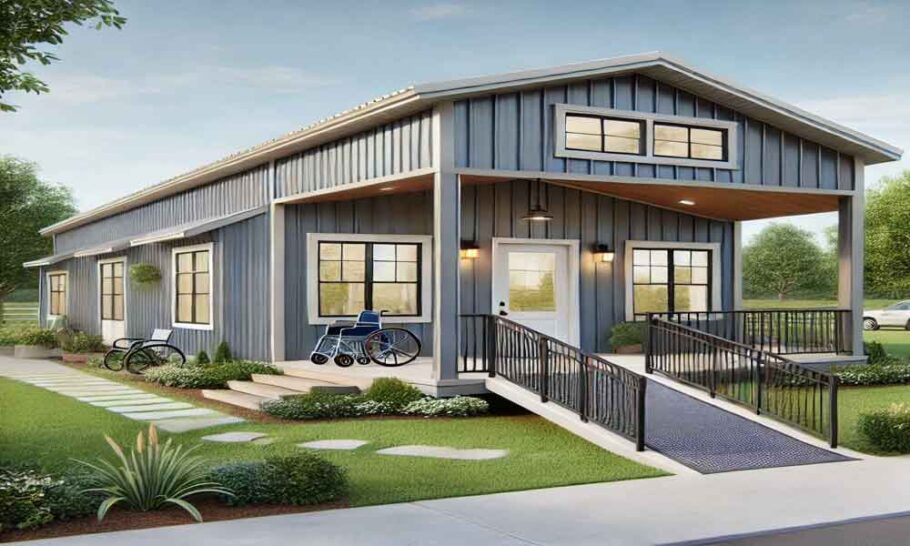
There’s a reason barndominiums have taken the housing market by storm. The allure of soaring ceilings, open-concept living, and the seemingly endless customization options make them a dream for homeowners looking to escape the cookie-cutter subdivisions. We often focus on the aesthetic—the reclaimed wood, the industrial lighting, the massive kitchen islands. But as an expert in functional design, I want to talk about a layer of the barndo lifestyle that often gets overlooked until it’s too late: Accessibility.
Whether you are building a forever home for a family member with mobility challenges, planning for your own golden years, or simply want a home that is as functional as it is beautiful, designing an accessible barndominium isn’t just about adding ramps and railings. It’s about creating a space that is intuitive, safe, and dignified for everyone who walks through the door.
Let’s move beyond the misconception that accessible design means clinical or ugly. In a barndominium, the wide-open floor plan that you love is actually the perfect foundation for a universally designed home. Here is how to build a barndo that you never have to leave.
The “Big Barn” Advantage: Why the Layout Works
The primary advantage of a barndominium, from an accessibility standpoint, is the lack of interior load-bearing walls in the main living area. Traditional stick-built homes are often chopped up into small, cramped rooms with narrow hallways. Barndos, built with a post-frame construction method, allow for massive, clear-span interiors.
This open concept is a godsend for wheelchair users or those with walkers. It eliminates the “pinch points” that make traditional homes difficult to navigate. When you start with a wide-open shell, you have the freedom to design wide, turning radii (the space needed to turn a wheelchair 180 degrees, ideally 60 inches) right into the floor plan without it feeling forced.
However, an open floor plan can also be a challenge for the visually impaired or those with cognitive issues, as large, empty spaces can be disorienting. The key is to use zoning rather than walls. You can define the living room, dining area, and kitchen through changes in flooring material, area rugs, or the strategic placement of furniture. This maintains the open flow while providing subtle navigational cues.
The Threshold: Where the Journey Begins
Accessibility starts before you even open the door. In a traditional barndominium build, the concrete slab is poured level with the top of the foundation stem wall. This often results in a significant step up into the home.
For an accessible barndo, we need to focus on the zero-entry threshold.
This is non-negotiable for aging in place. Work with your contractor to ensure that at least one entrance—preferably the main or a designated “mud room” entrance—has a concrete slab that is poured flush with the finished floor height inside. This eliminates the “lip” that can trip someone or stop a wheelchair dead in its tracks.
Furthermore, consider the approach. The path from the driveway to the door should be firm, stable, and slip-resistant. While gravel is a common rural aesthetic, it is a nightmare for mobility devices. Opt for poured concrete, pavers, or compacted decomposed granite that is bound with a stabilizer.
Navigating the Vertical: The Mezzanine Dilemma
Here is where the barndominium dream often hits a reality check: the sleeping quarters. The classic barndo design places the master suite in a loft or mezzanine overlooking the great room. It’s stunning, but it’s inherently inaccessible.
If you are designing for accessibility, you have two choices:
- Put the primary suite on the main level.
- Install an elevator.
The Main Level Master
This is the most practical and cost-effective solution. When planning your floor plan, dedicate a corner of the slab with high ceilings (9-10 feet) for the master bedroom and ensuite. This keeps everything you need for daily living—sleeping, bathing, cooking, and living—on one floor.
The Residential Elevator
If you absolutely must have a loft or a second story for guests or a home office, and you plan to stay in the home for decades, roughing in a shaft for a future elevator is a forward-thinking move. You don’t have to install the expensive machinery now, but if you frame the space and leave the chase open, you can add a hydraulic or cable-driven elevator later. This is far cheaper than trying to cut one into an existing structure.
The Heart of the Home: The Accessible Barndo Kitchen
The kitchen is where the open floor plan truly shines. In a standard kitchen, you have isolated work zones. In an accessible barndominium kitchen, we focus on the universal design triangle adapted for seated users.
- The Island: Barndominiums are famous for massive islands. For accessibility, lower a section of the island counter height to 34 inches or less, leaving knee space (at least 30 inches wide by 27 inches high) below for a wheelchair user to pull up and prep food. This allows someone to sit at the island and engage with the family, rather than being relegated to a separate, lower table.
- Appliances: Ditch the bottom-mount freezer. Side-by-side refrigerators with French doors are ideal. For ovens, a wall-mounted oven or a drawer-style microwave is far safer than a range with a door that swings down into a seated person’s lap.
- Storage: In a barndo, you have the vertical space. Use it wisely. Install pull-out shelving in lower cabinets. Avoid upper cabinets that are too high; opt for open shelving at a reachable height or cabinets with electric lowering mechanisms.
The Spa-like Experience: Bathroom Safety
Bathrooms in barndominiums are often designed to be luxurious, with massive walk-in showers and freestanding tubs. We can keep that luxury while building in safety.
- The Curbless Shower: Just like the front door, the shower should be a zero-threshold entry. The shower floor should slope gently to a linear drain, which is easier to navigate than a central drain. This allows a caregiver to assist someone in a shower chair without having to lift the chair over a curb.
- Wet Room Concept: Consider making the entire bathroom a “wet room.” In this design, the toilet and sink are in the same waterproofed area as the shower. The whole floor slopes slightly to a drain. This maximizes maneuvering space and makes cleaning incredibly easy.
- Grab Bars that Don’t Scream “Hospital”: Gone are the days of shiny, institutional chrome bars. Today, you can install ADA-compliant grab bars in matte black, brushed nickel, or even custom wood-look finishes. They can double as towel bars or toilet paper holders if installed correctly into blocking in the walls.
- Comfort Height: Install toilets that are “comfort height” (approximately 17-19 inches from floor to seat). They are easier for anyone with knee or back issues to use, not just wheelchair users.
Lighting and Contrast: Sensory Considerations
Accessibility isn’t just about physical mobility; it’s about vision and cognition. The high ceilings in barndominiums can create caverns of shadow if not lit properly.
- Even Lighting: Relying solely on a few pendants hanging from a 20-foot ceiling will create glare and deep shadows. Use a layered lighting approach: recessed can lights for ambient fill, under-cabinet lighting in the kitchen for tasks, and wall sconces in hallways to guide the way at night.
- Glare Control: Polished concrete floors are a staple of barndo design, but they can be a sheet of ice for someone with low vision, reflecting harsh light. Consider a matte sealer on the concrete to reduce glare.
- Visual Contrast: Use contrast to define spaces. If you have a vast open room with light-colored walls and light-colored floors, a person with depth perception issues may not be able to see where the wall ends and the floor begins. Use darker baseboards or a contrasting floor color in the kitchen to help define the edges of the space.
Future-Proofing the Structure
Finally, the beauty of a barndominium is that the structure itself is incredibly robust. Use that to your advantage. When the walls are open during construction, install plywood backing or “blocking” in key areas: behind the bathroom walls, around the shower, and next to the toilet. This creates a solid surface to screw grab bars into later, regardless of where the studs land. You don’t have to install the bars now, but knowing you can add them in five minutes without tearing open drywall is priceless peace of mind.
The Bottom Line
Building a barndominium is about creating a space that reflects your lifestyle. If your lifestyle includes, or may one day include, limited mobility, don’t view accessibility as a limitation. View it as the ultimate design challenge.
By integrating these principles—zero thresholds, wide turn radii, lever handles instead of knobs, and smart lighting—you ensure that your rustic, industrial, modern farmhouse dream home remains a source of joy and comfort for decades to come. It’s not just a house you’ll love; it’s a home that will love you back, no matter what life brings.