
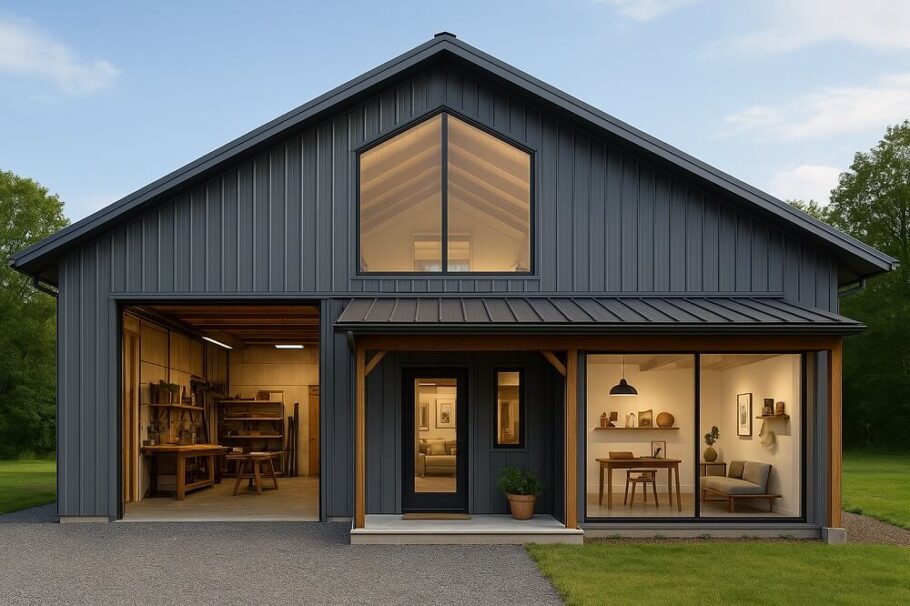
One of the biggest milestones in any barndominium build is getting the structure dried in. Once the shell is weather-tight, everything changes. Materials are protected, schedules stabilize, and interior work can move forward without fighting rain, wind, or temperature swings. For many builders and owners, the goal sounds ambitious: windows in, weather out, in just three days.
With the right planning, crew coordination, and building system, this goal is not only realistic—it’s becoming the new standard for efficient barndominium construction.
This guide breaks down how to achieve a weather-tight barndominium shell in as little as three days, what “weather-tight” really means, and why windows play such a critical role in the process.
What “Weather-Tight” Actually Means in a Barndominium Build
Before diving into timelines, it’s important to clarify what weather-tight means in the context of a barndominium.
A weather-tight shell typically includes:
- Structural frame fully erected and braced
- Roof panels installed with proper underlayment and closures
- Exterior wall panels installed and sealed
- Windows and exterior doors installed and flashed
- Major penetrations sealed (vents, rough mechanical openings)
At this stage, rain, wind, and debris are kept out of the building. While the structure may not yet be insulated or conditioned, it is protected enough for rough-in trades to begin safely.
Reaching this point quickly is especially valuable for barndominiums because many use steel frames and metal panels, which are highly dependent on proper sequencing and weather conditions during installation.
Why the First 72 Hours Matter More Than You Think
The first three days of a barndominium build often determine the success of the entire project. Delays at this stage can cascade into weeks of lost time later.
Here’s why the three-day window is so critical:
- Material protection: OSB, interior framing lumber, and sheathing degrade quickly when exposed to moisture
- Labor efficiency: Crews work faster when they’re not constantly tarping or drying materials
- Scheduling confidence: Subcontractors are more likely to stay on schedule once the shell is sealed
- Cost control: Fewer weather delays mean fewer unexpected labor overruns
A fast dry-in also reduces the risk of mold, warping, and callbacks caused by early moisture intrusion.
Day One: Foundation Prep and Structural Frame Erection
A three-day weather-tight timeline starts well before Day One. The real work happens in planning, staging, and sequencing.
By the time crews arrive on site, the foundation must be fully cured, square, and verified for anchor bolt placement. Any discrepancies here can derail the entire schedule.
Key Objectives for Day One
- Verify foundation dimensions and elevations
- Stage all framing materials in build order
- Erect the primary steel or post-frame structure
- Install permanent bracing
For steel-frame barndominiums or hybrid systems, pre-engineered components are essential. Factory-cut columns, rafters, and girts eliminate field fabrication delays and ensure everything aligns for fast panel installation.
By the end of Day One, the skeleton of the building should be standing, plumb, and ready to receive roof components.
Day Two: Roofing System and Exterior Wall Panels
Day Two is where the shell truly starts to take shape. The roof is always the top priority because controlling vertical water entry is the fastest way to protect the structure.
Roofing Comes First
A proper roofing sequence includes:
- Roof underlayment or synthetic membrane
- Eave trim and closures
- Metal roof panels
- Ridge caps and sealant
High-quality closures and butyl tape at panel overlaps are critical. Rushing this step or skipping components often leads to leaks that are difficult to fix later without removing panels.
Wall Panels Follow Immediately
Once the roof is on, wall panels can be installed without fear of water pooling inside the structure.
Efficient wall panel installation depends on:
- Pre-cut panels with labeled placement
- Pre-installed window and door openings
- Consistent fastener spacing
- Proper use of foam closures and sealants
By the end of Day Two, a well-organized crew can have the building fully wrapped in metal, with rough openings clearly defined and protected.
Day Three: Windows, Doors, and Sealing the Envelope
Day Three is where the phrase “windows in, weather out” becomes reality.
Installing windows early may seem counterintuitive to some builders, but in barndominium construction, it’s a smart move when done correctly.
Why Early Window Installation Works
- Window openings are already framed or panel-cut
- Exterior access is unobstructed
- Flashing integrates cleanly with wall panels
- Interior materials are not yet at risk
The key is using windows designed for metal or post-frame construction and following a strict flashing protocol.
Proper Window Installation Steps
- Confirm rough opening dimensions and squareness
- Install sill flashing with positive drainage
- Set window plumb and level
- Apply side and head flashing in shingle fashion
- Seal perimeter with compatible sealant
Exterior doors, including overhead garage doors or large slider systems, should be installed or temporarily sealed during this phase to complete the envelope.
Once windows and doors are in place, crews can address remaining penetrations such as:
- Vent pipes
- Electrical service entries
- Temporary HVAC or dehumidification openings
At the end of Day Three, the barndominium should be fully weather-tight and ready for interior work.
The Role of Pre-Planning in a 3-Day Dry-In
Achieving a weather-tight shell in three days is less about working faster and more about eliminating friction.
Successful projects share these traits:
- Complete construction documents before materials arrive
- Pre-ordered windows and doors delivered on time
- Clear crew roles and daily objectives
- No on-site design decisions
Every missing detail costs time. Every unanswered question slows the build.
Many builders now rely on panelized wall systems or prefabricated components to remove uncertainty from the process. When openings, trim locations, and fastening patterns are decided in advance, installation becomes repeatable and predictable.
Common Mistakes That Slow Down the Process
Even experienced crews can miss the three-day target if a few key issues arise.
Poor Material Staging
If panels, trim, and windows are scattered or delivered out of sequence, crews waste hours just moving materials around.
Incorrect Window Specifications
Residential windows not designed for metal buildings often require field modifications, custom flashing, or extra framing, all of which eat into the schedule.
Weather Ignorance
Ironically, many weather delays happen because builders fail to plan around predictable conditions. Wind limits panel installation, and sealants require minimum temperatures to cure properly.
Rushing the Sealant Work
A shell that goes up fast but leaks is not a success. Skipping closures, under-tightening fasteners, or rushing flashing leads to long-term problems that are expensive to fix.
Why a Fast Weather-Tight Shell Benefits the Entire Build
Once the barndominium is sealed, everything else becomes easier.
- Electrical and plumbing rough-ins can proceed without interruption
- Insulation stays dry and performs as designed
- Interior framing remains straight and true
- Project timelines become more predictable
For owner-builders, this stage is also a huge psychological win. Seeing a fully enclosed structure after just a few days builds momentum and confidence.
Final Thoughts: Speed Comes from Systems, Not Shortcuts
Getting a barndominium weather-tight in three days is not about cutting corners. It’s about using the right systems, sequencing work intelligently, and respecting the building envelope.
When windows are installed at the right time, panels are properly sealed, and crews are aligned around a clear plan, “windows in, weather out” becomes more than a slogan—it becomes a repeatable process.
In modern barndominium construction, speed and quality are no longer opposites. With the right approach, you can have both—starting with a weather-tight shell in just three days.