
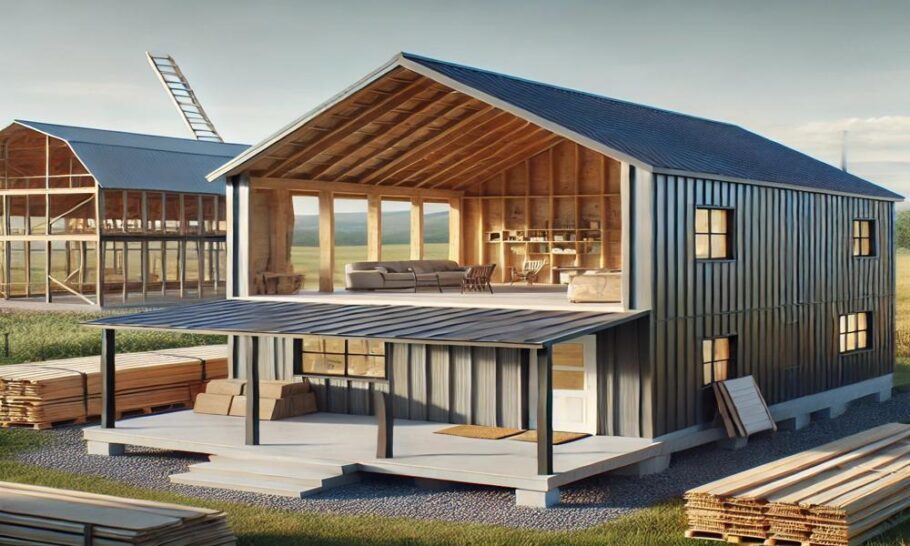
When planning a barndominium build, most people focus heavily on the finished structure—floor plans, exterior panels, insulation systems, and interior finishes. However, one of the most overlooked yet absolutely critical aspects of the construction process happens long before drywall, cabinetry, or lighting is installed: establishing temporary power and water supply.
Without reliable temporary utilities, construction slows down, safety risks increase, and costs can escalate quickly. From concrete pours and welding work to framing, plumbing, and cleanup, nearly every phase of a barndominium build depends on access to electricity and water. Because barndominiums are often built on rural or undeveloped land, setting up these utilities can be more complex than on a traditional subdivision lot.
This guide walks through everything you need to know about temporary power and water supply for barndominium construction—what options exist, how to plan ahead, common mistakes to avoid, and how to transition smoothly to permanent utilities when the build is complete.
Why Temporary Utilities Matter in Barndominium Builds
Barndominiums are frequently constructed in locations that lack existing infrastructure. Unlike suburban home builds, where power poles and water mains are already nearby, barndominium sites may be completely raw land. This makes temporary utilities not just a convenience, but a necessity.
Temporary power supports:
- Power tools such as saws, welders, compressors, and drills
- Lighting for early morning or evening work
- Charging batteries and running site offices
- HVAC equipment during certain build stages
Temporary water is required for:
- Concrete mixing and curing
- Dust control
- Plumbing rough-ins and pressure testing
- Crew sanitation and cleanup
Trying to build without properly planned temporary utilities often results in delays, unsafe working conditions, and higher labor costs.
Temporary Power Options for Barndominium Construction
The best temporary power solution depends on your site location, build timeline, and budget. In many cases, builders use a combination of methods during different phases of construction.
Temporary Power Pole (T-Pole)
A temporary power pole is the most common and reliable solution for barndominium construction. It consists of a freestanding pole equipped with a meter base, breaker panel, and outlets.
This setup allows the local electric utility to provide grid power before the permanent structure is complete.
Advantages of a temporary power pole
- Stable, consistent electricity
- Supports high-demand tools and equipment
- Often required by inspectors and utility providers
- Can later be reused or converted for permanent service
Considerations
- Requires permitting and inspections
- Must meet local utility and electrical code requirements
- Installation usually requires a licensed electrician
For barndominium projects expected to last several months, a temporary power pole is almost always the best long-term solution.
Generator Power
Portable or towable generators are often used at the earliest stages of construction or in very remote areas.
When generators make sense
- Short-duration projects
- Early site work before utility approval
- Extremely rural locations without nearby grid access
Limitations
- Fuel costs add up quickly
- Limited power output
- Noise concerns
- Not ideal for continuous heavy tool usage
Generators work well as a backup or interim solution, but most barndominium builders transition to grid-based temporary power as soon as possible.
Temporary Power from Adjacent Structures
If your barndominium is being built near an existing home, barn, or shop, it may be possible to temporarily run power from that structure.
Important notes
- Must be approved by local codes and inspectors
- Extension cords alone are rarely acceptable
- Load limits must be respected to avoid damage
This option can reduce upfront costs but is not suitable for high-demand construction activities.
Planning Temporary Electrical Load Requirements
One common mistake in barndominium construction is underestimating electrical demand. Metal building construction often involves welding, cutting, and heavy-duty tools that draw significant power.
Before installing temporary power, consider:
- Number of contractors on site simultaneously
- Types of tools being used
- Welding equipment requirements
- Lighting needs
- Office or storage trailers
Oversizing the temporary panel slightly can prevent nuisance breaker trips and costly downtime.
Temporary Water Supply Options for Barndominium Construction
Water access is just as critical as power, especially during foundation work and plumbing phases. Temporary water setups vary widely depending on site conditions.
Municipal Water Connection
If municipal water is available near your site, this is usually the most reliable option.
How it works
- A temporary water meter is installed by the utility provider
- Water is run to a frost-proof hydrant or hose bib
- The connection is later transitioned to permanent service
Benefits
- Consistent pressure and volume
- Minimal maintenance
- Supports plumbing inspections and testing
This option often requires permits, fees, and inspections but provides the least hassle during construction.
Temporary Well Installation
In rural areas, drilling a well early in the project is common for barndominium builds.
Advantages
- Long-term solution from day one
- No reliance on municipal infrastructure
- Supports both construction and future occupancy
Things to consider
- Higher upfront cost
- Requires pump, pressure tank, and power
- Water quality testing may be required
Many builders choose to install the permanent well early and use it as the temporary water source.
Water Delivery Services
Water hauling services deliver water to on-site storage tanks and are sometimes used during early construction stages.
Best for
- Short-term needs
- Remote locations
- Dust control and limited concrete work
Drawbacks
- Ongoing delivery costs
- Limited water volume
- Not suitable for plumbing rough-ins
This option is usually a temporary stopgap rather than a full construction solution.
Setting Up On-Site Water Distribution
Once water reaches your site, you still need a safe and usable distribution setup.
Common components include:
- Frost-proof hydrants
- Backflow prevention devices
- Insulated hoses
- Freeze protection for cold climates
Proper setup ensures inspectors, plumbers, and concrete crews can work efficiently without risking damage or code violations.
Safety and Code Compliance Considerations
Temporary utilities must still comply with local building codes and safety regulations. Inspectors often review temporary power and water setups before approving further construction.
Key compliance points include:
- Proper grounding of temporary power poles
- GFCI protection on outlets
- Weatherproof enclosures
- Safe hose routing and backflow prevention
Ignoring these requirements can result in failed inspections or jobsite shutdowns.
Coordinating Temporary Utilities with Construction Phases
Timing is everything. Temporary utilities should be installed early enough to support site work but planned with future transitions in mind.
Typical sequence:
- Land clearing and grading (often generator-powered)
- Temporary power pole installation
- Temporary or permanent water setup
- Foundation work
- Structural erection
- Mechanical rough-ins
Planning utilities alongside your build schedule prevents bottlenecks and keeps trades working efficiently.
Transitioning from Temporary to Permanent Utilities
As your barndominium nears completion, temporary systems must be converted to permanent service.
For power:
- Utility disconnects temporary service
- Permanent meter and panel are installed
- Electrical inspection is completed
For water:
- Temporary meters are removed or converted
- Permanent plumbing connections are finalized
- Pressure and leak testing is completed
Planning this transition early avoids delays at the final inspection stage.
Common Mistakes to Avoid
Many barndominium owners underestimate the complexity of temporary utilities. Avoid these common pitfalls:
- Waiting too long to apply for utility permits
- Undersizing temporary power panels
- Relying solely on generators for long builds
- Ignoring freeze protection for water lines
- Skipping inspections
Each mistake can cost time, money, or both.
Cost Expectations for Temporary Utilities
While costs vary by region, typical ranges include:
- Temporary power pole installation: moderate upfront cost
- Generator rental and fuel: ongoing expense
- Temporary water meters: utility fees plus deposits
- Well drilling: higher upfront but long-term value
Budgeting for utilities early helps prevent unpleasant surprises.
Final Thoughts on Temporary Power & Water for Barndominiums
Temporary power and water supply are foundational elements of a successful barndominium build. They directly affect construction speed, safety, and overall cost control. While these systems may feel “temporary,” the planning behind them should be anything but.
By understanding your site conditions, coordinating with utilities early, and selecting the right solutions for your project, you create a smoother construction process and set your barndominium up for long-term success.
A well-powered, well-supplied jobsite is not just convenient—it’s essential.