
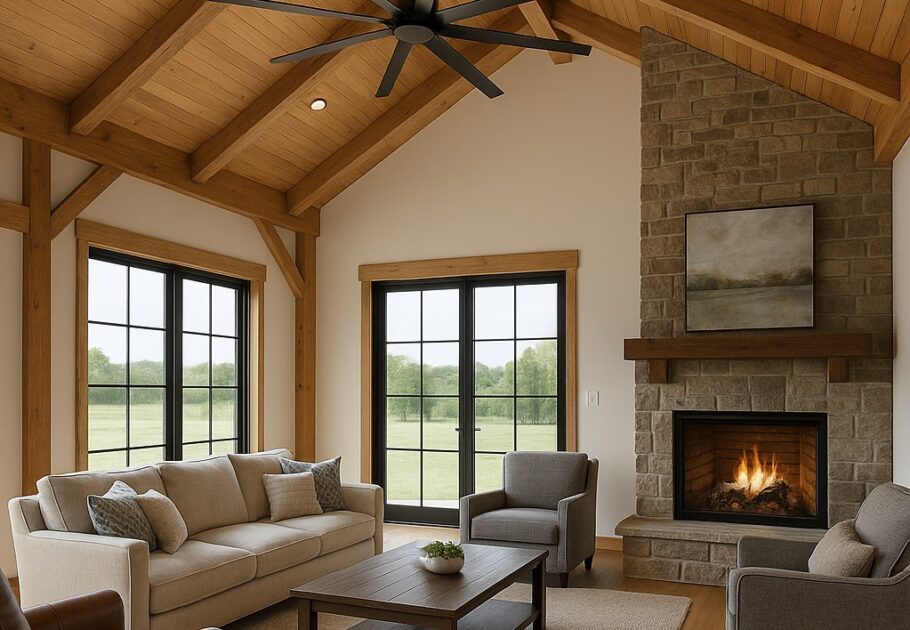
Designing an HVAC system for a barndominium is not the same as designing one for a conventional house. While barndominiums can be incredibly energy-efficient and comfortable, they can also become difficult to heat or cool if the HVAC system isn’t planned correctly from the start. The combination of metal construction, open floor plans, tall ceilings, and mixed-use spaces requires a thoughtful approach that balances comfort, efficiency, and long-term operating costs.
Whether you’re building a residential barndominium, a shop-house combo, or a large multi-zone structure, HVAC design should be considered as early as the floor plan stage. This article breaks down how barndominium HVAC systems work, common challenges, system options, and design best practices to ensure year-round comfort.
Why HVAC Design Matters More in a Barndominium
Barndominiums behave differently than traditional stick-built homes. Metal siding and roofing transfer heat quickly, large open spaces affect airflow, and ceiling heights can exceed 16 or even 20 feet. These characteristics make HVAC sizing and distribution more critical than in a standard residential build.
Poor HVAC design can lead to:
- Hot and cold spots throughout the home
- High energy bills despite efficient equipment
- Excessive humidity or condensation issues
- Short cycling and premature equipment failure
- Discomfort in lofts, bedrooms, or shop areas
When HVAC design is done correctly, a barndominium can be quieter, more comfortable, and more energy-efficient than many conventional homes.
Understanding Barndominium Heat Gain and Loss
Before choosing equipment, it’s important to understand where heat enters and leaves a barndominium.
Roof and Wall Heat Transfer
Metal panels absorb heat quickly when exposed to sunlight and lose heat rapidly in cold conditions. Without proper insulation and thermal breaks, HVAC systems must work overtime to maintain indoor temperatures.
Air Infiltration
Barndominiums can be extremely tight when properly sealed, but poorly sealed buildings allow uncontrolled air leakage around doors, windows, and framing connections. Air infiltration increases heating and cooling loads and reduces comfort.
Ceiling Height and Stratification
Warm air rises, which means tall ceilings can trap heat above living spaces in winter while leaving occupants cold at floor level. In summer, high ceilings can make it harder to cool occupied zones efficiently.
Mixed-Use Areas
Many barndominiums include workshops, garages, or storage areas attached to living space. These areas have different heating and cooling needs and should not always share the same HVAC system.
Load Calculations Are Not Optional
One of the biggest mistakes in barndominium HVAC design is skipping a proper Manual J load calculation. Square-foot rules of thumb do not work for metal buildings with unique layouts and insulation assemblies.
A proper load calculation accounts for:
- Building orientation and location
- Insulation levels in walls, roof, and slab
- Window size, type, and placement
- Ceiling heights and open volumes
- Occupancy and appliance heat loads
Oversized HVAC systems cycle too frequently, fail to remove humidity, and waste energy. Undersized systems struggle to keep up during extreme weather. A correctly sized system delivers steady comfort and longer equipment life.
Common HVAC System Options for Barndominiums
There is no single “best” HVAC system for all barndominiums. The right choice depends on climate, building size, layout, and budget.
Mini-Split Heat Pump Systems
Ductless mini-splits are one of the most popular HVAC options for barndominiums.
Advantages include:
- High efficiency and low operating costs
- Individual zone control
- Minimal ductwork required
- Ideal for open floor plans and additions
Mini-splits work exceptionally well in well-insulated barndominiums and are especially popular in moderate climates. Multiple indoor heads can be used to control bedrooms, lofts, and living areas independently.
Ducted Heat Pump Systems
Traditional ducted heat pumps provide centralized heating and cooling and work well in barndominiums with defined rooms and ceilings.
Key considerations include:
- Proper duct sizing for large open spaces
- Duct placement within the conditioned envelope
- Zoning to prevent uneven temperatures
Ducted systems often work best when HVAC chases are planned into the building design early.
Gas Furnace with Central Air
In colder climates, gas furnaces paired with central air conditioning remain a reliable option.
Pros include:
- Strong heating performance in extreme cold
- Familiar technology for many contractors
- Lower heating costs where natural gas is available
However, duct design and air sealing become especially important to avoid heat loss in large structures.
Radiant Floor Heating
Radiant floor heating is highly compatible with barndominiums built on slab foundations.
Benefits include:
- Even, comfortable heat distribution
- No air movement or noise
- Ideal for tall ceilings and open spaces
Radiant systems are typically paired with mini-splits or separate cooling systems since radiant floors do not provide air conditioning.
Zoning Is Critical for Comfort
Zoning allows different areas of a barndominium to be heated or cooled independently. This is especially important in buildings with:
- Multiple floors or lofts
- Large open living areas
- Bedrooms with different sun exposure
- Attached shops or garages
Without zoning, one thermostat may overheat one area while leaving another uncomfortable. Zoning can be achieved through:
- Multiple mini-split indoor units
- Motorized duct dampers
- Separate systems for living and work spaces
Proper zoning improves comfort and reduces energy waste.
Duct Design Challenges in Barndominiums
If you choose a ducted HVAC system, duct design must be handled carefully.
Avoid Running Ducts in Unconditioned Space
Ducts installed in attics or unconditioned roof cavities lose energy quickly. In barndominiums, it’s best to keep ducts inside conditioned space whenever possible.
Plan Duct Routes Early
Exposed steel framing and open ceilings make retrofitting ducts difficult. HVAC routing should be coordinated with structural design, lighting, and plumbing before construction begins.
Use Proper Air Distribution
Large rooms need carefully placed supply and return vents to prevent stagnant air zones and temperature swings.
Insulation and HVAC Go Hand in Hand
No HVAC system can overcome poor insulation. In fact, insulation choices directly affect HVAC sizing and performance.
Wall and Roof Insulation
Common barndominium insulation options include:
- Closed-cell spray foam
- Hybrid spray foam and batt systems
- Rigid foam with framed interior walls
High R-values and continuous insulation reduce heat transfer and allow smaller, more efficient HVAC systems.
Slab and Foundation Insulation
Insulating the slab edge and underside reduces heat loss and improves comfort, especially when radiant floor heating is used.
Air Sealing
A tight building envelope reduces drafts, humidity problems, and HVAC runtime.
Ventilation and Indoor Air Quality
Modern barndominiums are often very airtight, which makes mechanical ventilation necessary.
Fresh Air Systems
Energy Recovery Ventilators (ERVs) or Heat Recovery Ventilators (HRVs) provide fresh air while minimizing energy loss.
Humidity Control
Metal buildings are especially vulnerable to condensation. Proper ventilation and correctly sized HVAC systems help control indoor humidity and protect the structure.
Filtration
High-quality air filtration improves indoor air quality, especially in barndominiums with attached shops or agricultural use.
HVAC Design for Shop Areas
Workshops and garages should almost always be separated from living spaces.
Best practices include:
- Separate HVAC systems or zones
- Dedicated ventilation for fumes and dust
- Air sealing between shop and home
This approach protects indoor air quality and reduces heating and cooling costs.
Planning HVAC Early Saves Money
The most cost-effective HVAC systems are designed alongside the building, not added afterward. Early HVAC planning allows for:
- Optimized equipment sizing
- Cleaner duct and equipment placement
- Lower installation costs
- Better long-term efficiency
Trying to “make HVAC fit later” often leads to compromises that affect comfort for the life of the building.
Final Thoughts on Barndominium HVAC Design
Barndominium HVAC design is not a one-size-fits-all decision. The best systems are tailored to the building’s layout, climate, insulation strategy, and how the space will be used. When designed correctly, a barndominium can be exceptionally comfortable, energy-efficient, and quiet year-round.
By investing time in load calculations, zoning, insulation, and thoughtful equipment selection, you ensure that your barndominium performs as well as it looks. HVAC may not be the most visible part of the build, but it has one of the biggest impacts on daily comfort and long-term satisfaction.