
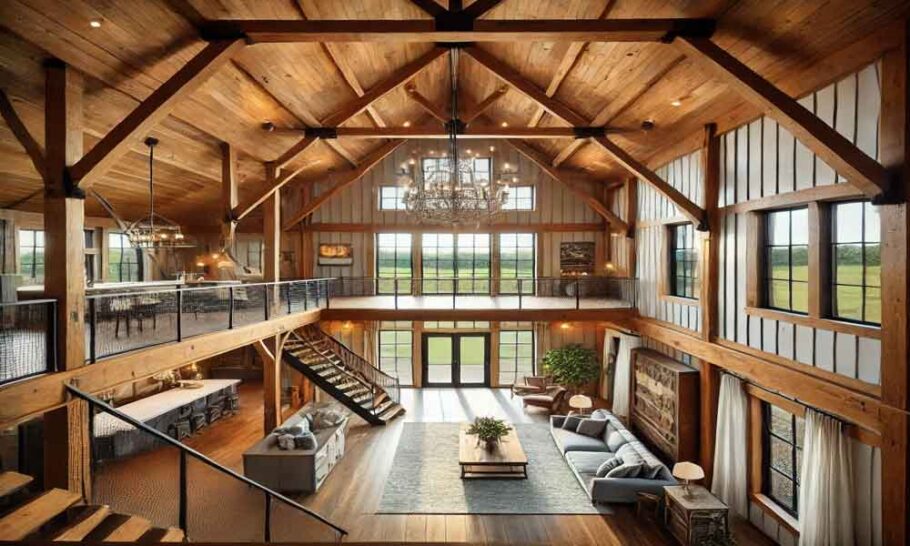
In modern construction, speed is no longer just a luxury—it is a competitive advantage. Whether you are building a barndominium, a custom home, or a light commercial structure, the faster you can get a building dried in and enclosed, the more predictable your schedule, budget, and quality become. One construction method that is transforming this phase of the project is the panelized build.
A panelized build uses pre-fabricated wall sections that are manufactured in a controlled facility and delivered to the job site ready for installation. Instead of framing every wall piece by piece in the field, crews assemble large wall panels in a matter of hours. This approach dramatically accelerates the enclosure process while improving accuracy, consistency, and long-term performance.
In this article, we will explore what a panelized build is, how it works, why it speeds up construction, and when it makes the most sense for your project.
What Is a Panelized Build?
A panelized build is a construction method where wall systems are manufactured off-site in sections called panels. These panels typically include:
- Structural framing
- Exterior sheathing
- Window and door openings
- Weather-resistant barriers
- Sometimes insulation and interior services
Once delivered to the site, the panels are lifted into place and fastened together, forming the building envelope much faster than traditional stick framing.
Unlike modular construction, which delivers entire room-sized modules, panelized construction keeps flexibility high while still offering factory-level precision.
The Traditional Enclosure Process
To appreciate the speed of panelized construction, it helps to understand the traditional process.
With site-built framing:
- Lumber is delivered in raw form.
- Walls are laid out, cut, and assembled on-site.
- Crews stand walls one at a time.
- Openings are measured and adjusted manually.
- Sheathing is applied after framing.
- Weather protection is added afterward.
Each step depends heavily on weather, crew experience, and jobsite organization. Delays in one phase ripple through the entire schedule.
Now compare that to panelized construction.
How Panelized Walls Are Made
Panelized walls are built in factories or specialized fabrication shops where conditions are controlled. This provides several advantages:
- Precise measurements using CAD and CNC equipment
- Consistent framing quality
- Proper fastening patterns
- Square and plumb assemblies
- Reduced material waste
The design is converted into shop drawings, then built exactly to plan. Windows, doors, and service chases are already accounted for before the panel ever reaches your site.
How Panelized Builds Speed Up Enclosure
The enclosure phase is the moment when a structure becomes weather-tight. This is the most critical milestone in any project schedule. Panelized construction accelerates this phase in several ways.
Faster Installation Time
A crew can install an entire wall in minutes rather than hours. A full home can often be framed and enclosed in a few days instead of several weeks.
This rapid installation:
- Reduces labor hours
- Minimizes weather exposure
- Shortens project timelines
Parallel Construction
While panels are being manufactured, site work continues. Foundations, utilities, and slab preparation happen at the same time. When the panels arrive, the project immediately moves into vertical construction.
This overlapping workflow is one of the biggest time-saving advantages of panelized builds.
Reduced Rework
Factory precision eliminates many common framing mistakes such as:
- Out-of-square walls
- Inconsistent stud spacing
- Misaligned openings
Less rework means fewer delays and fewer surprise costs.
Immediate Weather Protection
Many panel systems include pre-installed weather barriers. Once panels are installed, the structure is nearly sealed, allowing interior work to begin much sooner.
Why Enclosure Speed Matters
Faster enclosure does more than save time—it protects your investment.
- Materials are less exposed to rain and sun.
- Interior finishes can begin earlier.
- Moisture-related defects are reduced.
- Project financing and carrying costs decrease.
In barndominium construction especially, fast enclosure prevents steel components and insulation from being exposed to prolonged weather.
Structural Benefits of Panelized Walls
Speed is only part of the advantage. Panelized walls also improve structural performance.
Because they are assembled in controlled environments:
- Fastener spacing is consistent
- Load paths are engineered correctly
- Sheathing attachment is optimized
- Structural alignment is precise
This leads to stronger wall assemblies with better resistance to wind, seismic forces, and long-term movement.
Energy Efficiency Advantages
Panelized walls often outperform site-built walls in energy efficiency.
Better sealing reduces air leaks. Consistent insulation placement improves thermal performance. Tight connections between panels reduce thermal bridging.
When combined with modern insulation systems, panelized walls can significantly lower heating and cooling costs.
Labor Market Benefits
Skilled framing labor is increasingly hard to find in many regions. Panelized construction reduces dependence on large framing crews.
Smaller teams can handle installation, making scheduling easier and more predictable. This is especially valuable for rural or remote barndominium projects.
Quality Control Improvements
In traditional framing, quality varies from crew to crew and day to day. Panelized construction standardizes quality.
Every panel is inspected before shipping. Problems are caught early, not after drywall is installed.
This level of quality control leads to fewer callbacks, fewer warranty claims, and happier owners.
Transportation and Site Logistics
Panelized walls are designed for efficient shipping. Panels are stacked, labeled, and delivered in installation order.
On-site:
- Less material clutter
- Cleaner jobsite
- Safer working conditions
- Faster workflow
This improves productivity for all trades that follow.
Cost Considerations
Many people assume panelized construction is more expensive. In reality, the total project cost is often equal or lower when all factors are considered.
Savings come from:
- Reduced labor hours
- Shorter construction schedules
- Less waste
- Fewer mistakes
- Lower financing costs
While panel fabrication may appear higher on paper, the overall project economics are often more favorable.
Panelized Builds in Barndominium Construction
For barndominiums, panelized walls are particularly powerful.
Metal shells can be combined with interior panelized wall systems to create:
- Faster build schedules
- Precise interior layouts
- Improved insulation integration
- Cleaner mechanical routing
Panelized partitions allow interior spaces to be completed quickly after the shell is erected.
This hybrid approach combines the strength of steel framing with the speed and precision of panelized wall construction.
Design Flexibility
Panelized construction does not limit creativity. Custom window layouts, vaulted ceilings, and complex wall shapes can all be accommodated.
Because panels are built from digital plans, adjustments are easy to implement before fabrication begins.
This allows homeowners and designers to maintain full control over aesthetics and functionality.
When Panelized Construction Makes the Most Sense
Panelized builds are ideal when:
- Schedule is critical
- Weather conditions are unpredictable
- Skilled labor is limited
- High quality control is desired
- Energy efficiency is a priority
- Large wall areas are involved
For barndominiums, custom homes, and multi-unit residential projects, panelized construction often delivers the best balance of speed and performance.
Potential Challenges to Consider
While panelized construction has many benefits, it is not without considerations.
- Accurate planning is essential
- Changes after fabrication can be costly
- Crane access may be required
- Transportation logistics must be coordinated
However, with proper project management, these challenges are easily handled.
Comparing Panelized to Other Prefab Methods
Panelized construction sits between traditional framing and full modular construction.
It offers:
- More flexibility than modular
- More speed than site-built framing
- Better quality control than both
This balance makes it one of the most attractive modern building methods available today.
Future of Panelized Construction
As technology improves, panelized systems are becoming more advanced. Some panels now include:
- Pre-installed windows
- Integrated insulation systems
- Built-in service chases
- Smart building components
These innovations will continue to reduce build times and improve building performance.
Final Thoughts
The panelized build is not just a faster way to frame walls—it is a smarter way to build.
By shifting critical construction steps into controlled environments, builders gain speed, accuracy, consistency, and efficiency. The enclosure process becomes predictable instead of stressful. Projects move forward faster with fewer surprises.
For barndominium owners, custom home builders, and developers alike, panelized wall construction offers a powerful solution to modern construction challenges.