Building a barndominium blends residential comfort with agricultural or industrial construction methods, which makes inspections especially important. Unlike conventional homes, barndominiums often involve post-frame construction, steel framing, mixed-use spaces, large spans, and custom systems that can raise red flags if not carefully prepared for inspection.
Failing an inspection can mean delays, rework, additional costs, and frustration for both DIY builders and professional contractors. That’s why having a pre-inspection checklist for each major inspection phase—foundation, framing, and final—is essential. These checklists help you catch issues before the inspector does, ensuring smoother approvals and a more durable, code-compliant structure.
This guide walks through what to verify before each inspection stage, with special considerations for barndominiums.
Understanding the Barndominium Inspection Process
Most jurisdictions follow a similar inspection sequence, even if building codes vary locally. For barndominiums, inspections typically include:
- Site and footing inspection
- Foundation inspection
- Framing inspection
- Rough mechanical, electrical, and plumbing inspections
- Insulation inspection
- Final inspection
While this article focuses on foundation, framing, and final inspections, remember that these stages build on earlier approvals. Problems left unresolved early tend to multiply later.
Always verify requirements with your local building department, as barndominium construction methods may trigger additional scrutiny.
Pre-Foundation Inspection Checklist
The foundation inspection is one of the most critical phases. Errors at this stage are expensive—or impossible—to fix once concrete is poured.
Site Preparation and Layout
Before inspection, confirm that the site meets approved plans and engineering requirements.
- Property lines are clearly marked and setbacks respected
- Building location matches the approved site plan
- Elevation and grading comply with floodplain or drainage rules
- Soil compaction meets engineering specifications
- Erosion control measures are installed
Inspectors often fail foundations before even looking at forms if site prep is incomplete or incorrect.
Footings and Forms
Footings support the entire barndominium, especially important for large clear spans and heavy steel structures.
- Footing width and depth match stamped engineering drawings
- Trench bottoms are level and undisturbed
- Forms are straight, square, and securely braced
- No standing water or loose soil in footing trenches
- Pier locations for post-frame construction are accurate
For post-frame barndominiums, inspectors will pay close attention to embedded posts or pier dimensions.
Reinforcement and Anchoring
Concrete strength depends heavily on proper reinforcement placement.
- Rebar size, spacing, and placement match plans
- Rebar is properly elevated and not resting on soil
- Overlaps meet minimum lap requirements
- Anchor bolts or brackets are correctly positioned
- Post brackets are rated for uplift and lateral loads
Improper anchor bolt spacing is one of the most common causes of foundation inspection failure.
Utilities and Penetrations
Once concrete is poured, utility mistakes become permanent problems.
- Plumbing sleeves and drains are correctly located
- Electrical conduit penetrations are planned and capped
- Radon mitigation piping is installed if required
- Water service entry points are sealed and supported
Double-check measurements against your floor plan before inspection.
Pre-Framing Inspection Checklist
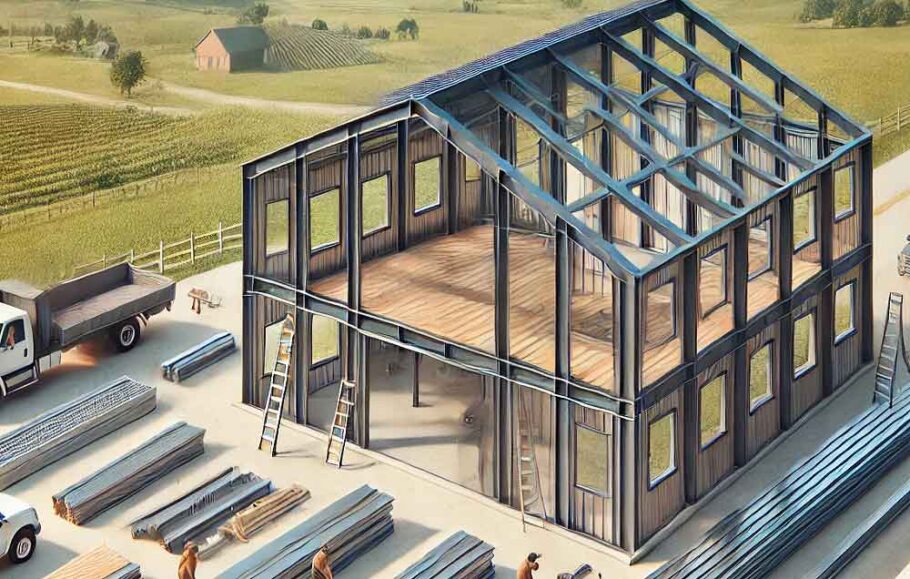
The framing inspection ensures the barndominium’s structural integrity. Because barndominiums often combine residential and agricultural construction techniques, inspectors may scrutinize framing more closely than usual.
Structural Framework
Whether post-frame, steel-frame, or hybrid, structural components must align with approved engineering.
- Posts, columns, or steel frames are correctly spaced
- Load paths are continuous from roof to foundation
- Girders, beams, and headers meet span requirements
- All fasteners match specified size and type
- No unauthorized field modifications
Any deviation from engineered drawings should be approved in writing before inspection.
Wall and Roof Systems
Framing must support both structural loads and exterior finishes.
- Wall girts or studs are properly aligned and secured
- Roof trusses are installed per manufacturer layout
- Truss bracing is complete and correct
- Roof slope and overhangs match approved plans
- No damaged or altered trusses
Cutting or drilling trusses without engineering approval is an automatic inspection failure.
Sheathing and Bracing
Barndominiums rely on proper bracing for wind and seismic resistance.
- Wall and roof sheathing is correctly installed
- Nail spacing meets code and engineering specs
- Shear walls are located as designed
- Diagonal bracing is installed where required
- Openings are framed with proper headers and supports
In high-wind or seismic zones, bracing details receive extra attention.
Rough Openings and Interior Framing
Interior framing must support finishes, utilities, and long-term durability.
- Door and window openings are sized correctly
- Stair framing meets rise, run, and landing requirements
- Loft or mezzanine framing meets load ratings
- Fire blocking is installed at required intervals
Inspectors often fail framing inspections for missing fire blocking, especially in tall wall cavities common in barndominiums.
Rough Mechanical, Electrical, and Plumbing Coordination
Although separate inspections may apply, framing must accommodate these systems properly.
- Plumbing lines are properly supported and protected
- Electrical boxes are secured and correctly spaced
- HVAC chases are framed without compromising structure
- No over-drilled or notched framing members
Poor coordination between trades is a frequent source of inspection delays.
Pre-Final Inspection Checklist
The final inspection confirms that the barndominium is safe, livable, and compliant with all applicable codes.
Exterior Completion
Inspectors start outside and work their way in.
- Exterior siding or metal panels are fully installed
- Flashing is complete around doors and windows
- Roofing is installed and penetrations sealed
- Gutters and downspouts direct water away from foundation
- Final grading slopes away from the building
Incomplete exterior work is one of the most common final inspection failures.
Life Safety Systems
Safety systems are a top priority at final inspection.
- Smoke detectors installed in required locations
- Carbon monoxide detectors installed if required
- Emergency egress windows meet size and height rules
- Handrails and guardrails meet height and spacing codes
- Fire-rated assemblies are completed where required
In barndominiums with mixed-use spaces, inspectors pay close attention to fire separation.
Electrical System Verification
Electrical systems must be complete and operational.
- All outlets, switches, and fixtures installed
- GFCI and AFCI protection in required areas
- Electrical panel properly labeled
- Breaker sizes match circuit loads
- Exterior outlets and lighting installed
Temporary power setups must be removed before final inspection.
Plumbing System Completion
Plumbing must be functional and leak-free.
- Fixtures installed and secured
- Proper venting confirmed
- Water heater installed with safety features
- Pressure relief valve and discharge line installed
- No visible leaks or unsupported piping
Water heaters are a frequent inspection issue if clearances or drain pans are missing.
HVAC and Energy Efficiency
Energy code compliance is increasingly strict.
- HVAC system installed and operational
- Thermostat installed and functional
- Insulation meets R-value requirements
- Air sealing completed around penetrations
- Access panels provided where required
Barndominiums with large open spaces must demonstrate adequate heating and cooling capacity.
Interior Finishes and General Compliance
Final details matter more than many builders expect.
- Walls and ceilings finished
- Floors installed and safe to walk on
- Doors operate smoothly and latch properly
- Address numbers visible from the street
- All required inspections completed and approved
Even small omissions can prevent issuance of a certificate of occupancy.
Common Barndominium Inspection Pitfalls to Avoid
Barndominiums present unique challenges that can surprise inspectors and builders alike.
- Mixing agricultural and residential construction methods
- Deviating from engineered plans without approval
- Undersized foundations for heavy steel components
- Inadequate fire separation in shop-living spaces
- Poor moisture control and insulation detailing
Being proactive and organized helps prevent these issues.
Tips for Passing Inspections Smoothly
Preparation is more than checking boxes—it’s about communication and documentation.
- Keep stamped plans on-site at all times
- Schedule inspections only when fully ready
- Walk through with your contractor before inspection
- Fix minor issues proactively
- Be present during inspections if possible
Inspectors are more cooperative when they see effort and professionalism.
Final Thoughts on Barndominium Pre-Inspection Readiness
A barndominium is a significant investment, and inspections are there to protect that investment—not just satisfy bureaucracy. By using detailed pre-inspection checklists for foundation, framing, and final inspections, you reduce risk, save money, and keep your project moving forward.
Whether you’re a DIY builder or working with a design-build team, preparation is the difference between a smooth inspection and costly delays. Barndominiums reward thoughtful planning, and inspections are simply checkpoints confirming that your vision is built to last.
With the right preparation, inspections become milestones—not obstacles—on the path to your finished barndominium.