
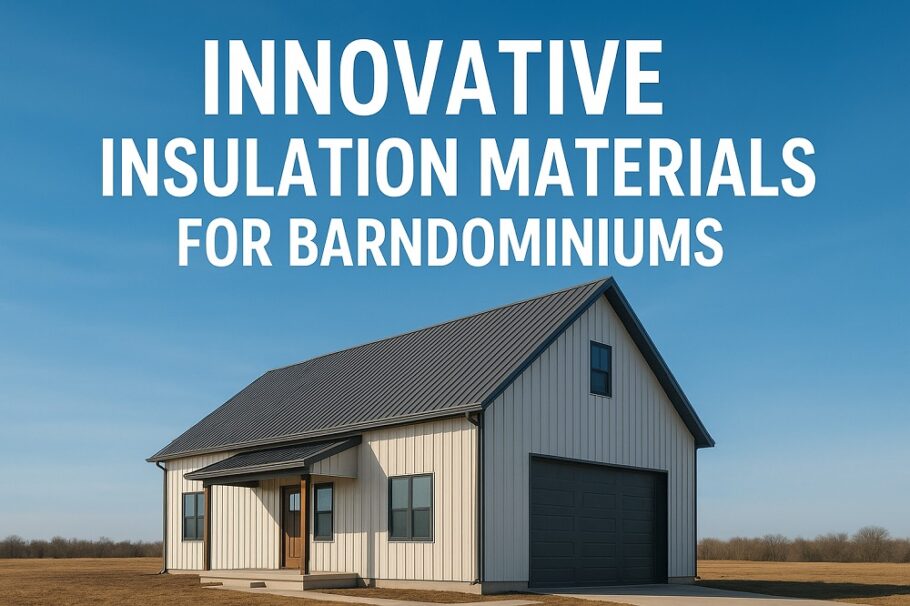
Barndominiums are known for their open layouts, steel frames, and versatile functionality, often blending residential living with workshops, garages, or agricultural storage. One of the most overlooked yet critical components affecting comfort and energy efficiency in a barndominium is the overhead door. Whether it serves a garage, shop, RV bay, or multi-use workspace, the overhead door can be one of the largest openings in the building envelope. If poorly designed or constructed with the wrong materials, it can become a major source of heat loss, air leakage, and rising utility costs.
Choosing the right materials for energy-efficient barndominium overhead doors is essential for maintaining indoor comfort, reducing heating and cooling loads, and protecting your investment long-term. This guide explores the best materials available today, how they contribute to thermal performance, and what barndominium owners should consider when selecting overhead doors for different climates and uses.
Why Overhead Door Materials Matter in Barndominiums
Unlike conventional homes, barndominiums often feature oversized overhead doors that can span 10 to 20 feet wide and 12 to 16 feet tall. These doors are frequently installed in metal wall systems, where thermal bridging is already a concern. If the door material lacks proper insulation or sealing capability, it can undermine the energy performance of even the best-insulated walls and roofs.
Overhead door materials influence energy efficiency in several ways:
- Insulation value (R-value)
- Air infiltration resistance
- Thermal bridging reduction
- Moisture and condensation control
- Long-term durability under temperature swings
Selecting the right material is not just about strength or appearance. It is about how well the door integrates into the overall building envelope of your barndominium.
Steel Overhead Doors with Insulated Cores
Steel is the most common overhead door material used in barndominiums, and for good reason. When paired with high-quality insulation, steel doors can deliver excellent energy performance while maintaining durability and security.
Advantages of Insulated Steel Doors
Insulated steel overhead doors typically consist of two steel skins bonded around an insulated core. This sandwich-style construction significantly improves thermal performance compared to single-layer steel doors.
Key benefits include:
- High strength-to-weight ratio
- Excellent resistance to wind loads
- Compatibility with large door openings
- Long lifespan with minimal maintenance
Steel doors are especially well-suited for barndominiums located in regions with high winds, snow loads, or temperature extremes.
Best Insulation Types Inside Steel Doors
The insulation material inside a steel overhead door plays a critical role in its energy efficiency.
Polyurethane insulation offers the highest R-value per inch. It is injected as a liquid and expands to fill all voids, bonding tightly to the steel skins. This results in superior thermal resistance, improved rigidity, and better air sealing.
Polystyrene insulation is a rigid foam panel installed between steel layers. While it provides a lower R-value than polyurethane, it is still effective and often more affordable. Polystyrene-insulated doors are common in moderate climates.
For energy-conscious barndominium owners, steel doors with polyurethane cores are often the top-performing option.
Aluminum Overhead Doors with Thermal Breaks
Aluminum overhead doors are valued for their lightweight nature and corrosion resistance. However, aluminum is a highly conductive material, which can work against energy efficiency if not properly designed.
Importance of Thermal Breaks
To make aluminum overhead doors energy-efficient, manufacturers incorporate thermal breaks. A thermal break is a non-conductive barrier placed between the interior and exterior aluminum components. This reduces heat transfer and minimizes condensation.
Without thermal breaks, aluminum doors can quickly transmit outdoor temperatures to the interior, making them unsuitable for conditioned spaces.
When Aluminum Doors Make Sense
Aluminum overhead doors can be a good choice for barndominiums in coastal or humid environments where corrosion resistance is critical. They are also popular in modern designs that incorporate glass panels.
For best performance, aluminum doors should include:
- Insulated cores
- Thermal break framing
- High-performance weather seals
While aluminum doors may not match steel doors in raw insulation value, advanced designs can still perform well in energy-efficient barndominiums.
Wood and Engineered Wood Overhead Doors
Wood overhead doors offer natural insulation properties and aesthetic appeal, making them attractive for residential-style barndominiums. However, not all wood doors are created equal when it comes to energy efficiency.
Solid Wood Doors
Solid wood has inherent thermal resistance, which helps slow heat transfer. Thicker wood doors generally perform better, but they can be heavy and require robust hardware and structural support.
Energy-related advantages include:
- Natural insulating properties
- Reduced thermal bridging
- Warm interior appearance
However, solid wood doors can be vulnerable to moisture, warping, and seasonal movement if not properly sealed and maintained.
Engineered Wood and Composite Doors
Engineered wood doors combine wood fibers with resins or composite cores to improve stability and insulation. These doors often include foam insulation and protective skins that resist moisture intrusion.
Engineered wood overhead doors provide:
- Better dimensional stability than solid wood
- Improved R-values when insulated
- Reduced maintenance compared to natural wood
For barndominiums seeking a balance between energy efficiency and rustic or residential aesthetics, engineered wood doors are a strong contender.
Fiberglass Overhead Doors for Thermal Performance
Fiberglass is an often-overlooked material that offers excellent insulation properties and resistance to environmental stressors.
Why Fiberglass Is Energy Efficient
Fiberglass does not conduct heat as readily as metal, which helps reduce thermal transfer. When combined with insulated cores, fiberglass overhead doors can achieve impressive energy performance.
Benefits include:
- Low thermal conductivity
- Resistance to corrosion and moisture
- Dimensional stability across temperature changes
Fiberglass doors are especially useful in humid or coastal climates where condensation and salt exposure can degrade metal components.
Limitations to Consider
Fiberglass doors may not be as impact-resistant as steel, making them less suitable for high-traffic workshop environments. However, for residential garage areas or lightly used bays, they can be an energy-efficient and durable option.
Glass and Full-View Overhead Doors with Insulated Panels
Modern barndominiums often incorporate full-view overhead doors with large glass panels to bring in natural light. While visually striking, glass doors can present energy challenges.
Insulated Glass Options
Energy-efficient glass overhead doors rely on advanced glazing technologies such as:
- Double-pane or triple-pane glass
- Low-emissivity coatings
- Argon or krypton gas fills
These features significantly improve thermal performance and reduce solar heat gain or heat loss depending on climate.
Frame Material Matters
The energy efficiency of glass doors depends heavily on the frame material. Aluminum frames must include thermal breaks, while steel or composite frames can provide better insulation.
Glass overhead doors are best used strategically, such as on south-facing walls with controlled shading, rather than as primary doors for unconditioned workshops.
Insulation Ratings and Air Sealing Performance
Material choice alone does not determine energy efficiency. How the door is constructed and installed matters just as much.
Understanding R-Values
R-value measures resistance to heat flow. Higher R-values indicate better insulation. For barndominium overhead doors used in conditioned spaces, an R-value of at least 12 is recommended, with high-performance doors reaching R-18 or higher.
However, advertised R-values often represent center-of-panel performance and may not account for edge losses or air leakage.
Importance of Weather Seals
High-quality perimeter seals, bottom astragals, and joint seals are essential. Even a well-insulated door can underperform if air leaks are present.
Look for doors with:
- Continuous bulb seals
- Flexible bottom seals
- Tight inter-panel connections
Air sealing often delivers greater energy savings than incremental increases in insulation thickness.
Climate-Specific Material Recommendations
Different climates place different demands on overhead door materials.
Cold climates benefit most from steel or composite doors with polyurethane insulation and high R-values to reduce heat loss.
Hot climates favor materials with reflective finishes, insulated cores, and tight seals to limit heat gain.
Humid regions require materials resistant to moisture and corrosion, such as aluminum with thermal breaks, fiberglass, or engineered composites.
Wind-prone areas demand strong steel doors with reinforced panels and insulation that also improves structural rigidity.
Matching door materials to your climate is critical for maximizing energy efficiency and durability.
Long-Term Energy Savings and Return on Investment
Energy-efficient overhead doors may cost more upfront, but they often pay for themselves through reduced heating and cooling expenses. In barndominiums where overhead doors are used daily, improved insulation can significantly stabilize indoor temperatures and reduce HVAC runtime.
Additional benefits include:
- Improved indoor comfort
- Reduced condensation and moisture damage
- Enhanced noise reduction
- Increased property value
When viewed as part of the overall building envelope, high-quality overhead doors are an investment rather than an expense.
Final Thoughts on Choosing the Best Materials
The best materials for energy-efficient barndominium overhead doors depend on how the space is used, the local climate, and the desired balance between performance, durability, and aesthetics. Insulated steel doors with polyurethane cores remain the top choice for most applications, offering superior insulation, strength, and longevity. However, aluminum with thermal breaks, engineered wood, fiberglass, and insulated glass doors all have their place in well-designed barndominiums.
By focusing on insulation quality, thermal breaks, air sealing, and climate compatibility, barndominium owners can select overhead door materials that enhance comfort, reduce energy costs, and support the long-term performance of their building.
An energy-efficient overhead door is not just a functional element. It is a key contributor to a smarter, more comfortable, and more sustainable barndominium.