
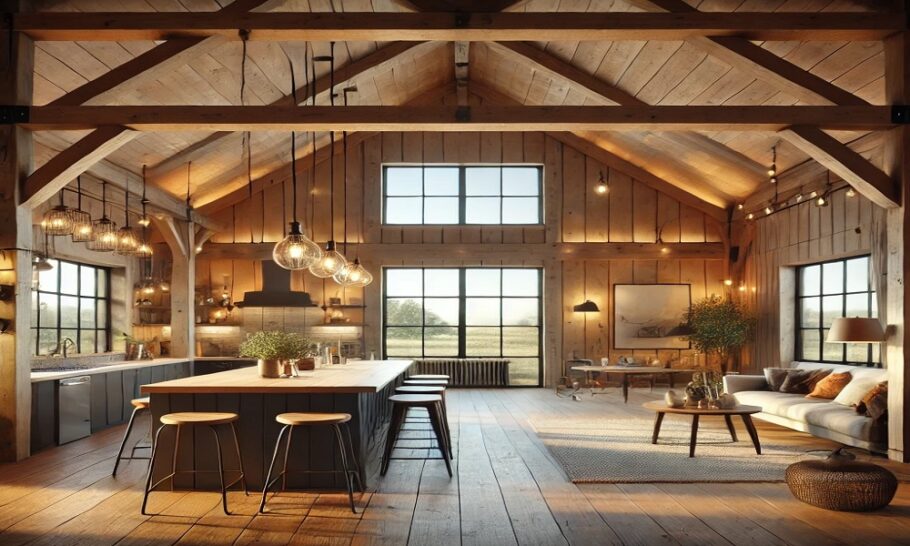
Radiant floor heating is becoming an increasingly popular option for barndominium owners who want better comfort, improved energy efficiency, and a cleaner interior layout without bulky ductwork. Because many barndominiums are built on concrete slab foundations, radiant floor heating naturally fits into their construction style. But what exactly is radiant floor heating, how does it work in a barndominium, and why are so many builders and homeowners choosing it?
This article explains radiant floor heating in simple terms, focusing on how it integrates with barndominiums, what makes it different from traditional heating systems, and what you should understand before deciding if it’s right for your project.
Understanding Radiant Floor Heating
Radiant floor heating is a system that heats a building from the floor upward. Instead of blowing warm air through ducts or relying on wall-mounted heaters, radiant systems deliver heat directly beneath the floor surface. The warmth then radiates evenly throughout the space, heating people, furniture, and objects rather than just the air.
The concept is simple but powerful. Heat naturally rises, and by placing the heat source at the lowest point in the room, radiant systems create a consistent and comfortable temperature from floor to ceiling. This is especially noticeable in barndominiums with open floor plans and high ceilings, where traditional forced-air systems often struggle to maintain even heat.
Radiant floor heating has been used for centuries in various forms, from ancient Roman bathhouses to modern European homes. Today’s systems are far more efficient, reliable, and customizable, making them well-suited for modern barndominium construction.
Why Radiant Floor Heating Works So Well in Barndominiums
Barndominiums are uniquely suited for radiant floor heating because of how they are typically built. Most barndominiums use slab-on-grade concrete foundations, which provide an ideal surface for embedding heating components.
Concrete acts as a thermal mass. Once heated, it holds and slowly releases warmth over time. This means the floor doesn’t cool down quickly, allowing the system to operate more efficiently and maintain a steady indoor temperature. In large, open barndominium layouts, this even heat distribution is a major advantage.
Another factor is design flexibility. Barndominiums often feature wide-open living areas, tall ceilings, and minimal interior walls. Radiant heating eliminates the need for duct chases, vents, and mechanical closets, freeing up wall and ceiling space and allowing for cleaner architectural designs.
Types of Radiant Floor Heating Used in Barndominiums
There are two primary types of radiant floor heating systems used in residential construction, including barndominiums.
Hydronic Radiant Floor Heating
Hydronic radiant floor heating is the most common option for barndominiums. It uses flexible PEX tubing installed beneath the floor surface. Warm water circulates through the tubing, transferring heat into the concrete slab and then into the living space.
The water is heated using a boiler, tankless water heater, geothermal system, heat pump, or even solar thermal panels. Hydronic systems are highly efficient and cost-effective for larger spaces, making them ideal for full-home heating in barndominiums.
Hydronic systems also offer zoning capabilities. Different areas of the barndominium can be heated independently, allowing homeowners to reduce energy use in rarely occupied spaces such as guest rooms, workshops, or storage areas.
Electric Radiant Floor Heating
Electric radiant floor heating uses heating cables or mats installed beneath the floor. When electricity passes through the cables, they generate heat that warms the floor surface.
Electric systems are easier to install and are often used in smaller areas like bathrooms or entryways. However, they typically cost more to operate over time, especially in larger barndominiums. For this reason, electric radiant heating is less common as a whole-house solution but may still be used for supplemental comfort zones.
How Radiant Floor Heating Is Installed in a Barndominium
Radiant floor heating is easiest and most cost-effective to install during new construction. In a barndominium, the installation process usually follows a specific sequence.
First, the ground beneath the slab is prepared and leveled. Rigid foam insulation is then installed to prevent heat from escaping downward into the soil. This step is critical for energy efficiency and system performance.
Next, PEX tubing or electric heating elements are laid out according to a carefully designed pattern. The layout ensures even heat distribution across the entire floor area. The tubing is secured in place and pressure-tested to confirm there are no leaks.
Once testing is complete, the concrete slab is poured over the heating system. After curing, the slab becomes both the structural foundation and the primary heat emitter. Floor finishes such as tile, polished concrete, engineered wood, or luxury vinyl can then be installed on top, depending on the homeowner’s design preferences.
How Radiant Floor Heating Feels Compared to Traditional Systems
One of the biggest differences homeowners notice with radiant floor heating is comfort. Instead of hot air blowing from vents and quickly rising to the ceiling, radiant systems provide gentle, uniform warmth across the entire floor.
Rooms feel consistently warm without hot or cold spots. Floors are comfortable to walk on, even in winter. Because heat is evenly distributed, thermostats can often be set lower while still maintaining the same level of comfort, which contributes to energy savings.
Radiant heating is also silent. There are no fans, blowers, or ducts creating background noise. This is particularly appealing in barndominiums designed for quiet rural living or open-concept layouts where sound travels easily.
Energy Efficiency and Performance
Radiant floor heating is known for its efficiency, especially in well-insulated barndominiums. Traditional forced-air systems lose energy through duct leaks, uneven airflow, and frequent on-off cycling. Radiant systems avoid these losses by delivering heat directly where it’s needed.
Because radiant heating warms objects and surfaces rather than just air, the indoor temperature feels comfortable at lower thermostat settings. The thermal mass of the concrete slab further improves efficiency by storing heat and releasing it slowly over time.
Hydronic systems can also be paired with high-efficiency boilers, heat pumps, or renewable energy sources, making them an excellent option for homeowners aiming for long-term energy savings or off-grid living.
Flooring Options Compatible with Radiant Heating
Radiant floor heating works with many flooring materials commonly used in barndominiums.
Concrete floors are one of the best options, as they conduct and store heat efficiently. Tile and stone are also excellent choices because they transfer heat quickly and evenly.
Engineered wood and certain types of luxury vinyl flooring can work well with radiant systems when properly rated for heat exposure. Solid hardwood is more sensitive to temperature changes but can still be used if moisture levels and temperatures are carefully controlled.
Choosing the right flooring material is an important part of system design and should be discussed early in the planning process.
Maintenance and Longevity
Radiant floor heating systems are known for their durability and low maintenance requirements. High-quality PEX tubing used in hydronic systems is designed to last several decades, often 30 to 50 years or more.
Because the system has few moving parts, there is less wear and tear compared to forced-air systems. Maintenance typically involves occasional checks of the boiler, pump, or heat source rather than the floor system itself.
Proper installation and pressure testing during construction greatly reduce the risk of leaks or failures, making radiant heating a reliable long-term solution for barndominiums.
Is Radiant Floor Heating Right for Every Barndominium?
While radiant floor heating offers many benefits, it is not always the best choice for every situation. Climate, budget, and lifestyle all play a role in determining whether it makes sense.
Radiant systems perform best in regions with cold or moderate winters where heating demand is consistent. In warmer climates where heating is rarely needed, the upfront investment may be harder to justify.
Budget is another consideration. Radiant floor heating typically costs more upfront than traditional HVAC systems, especially when installed throughout the entire home. However, many homeowners view this as a long-term investment in comfort, efficiency, and resale value.
Final Thoughts
Radiant floor heating in barndominiums is more than just a luxury feature. It is a practical, efficient, and highly compatible heating solution that aligns well with slab foundations, open layouts, and modern design goals.
By delivering even, quiet, and energy-efficient warmth from the ground up, radiant floor heating enhances everyday comfort while reducing long-term operating costs. For barndominium owners planning new construction and prioritizing efficiency and comfort, radiant floor heating is often one of the smartest systems to consider.
Understanding how it works and how it integrates with barndominium construction allows you to make informed decisions early in the design process, ensuring your home is comfortable, efficient, and built for the long haul.